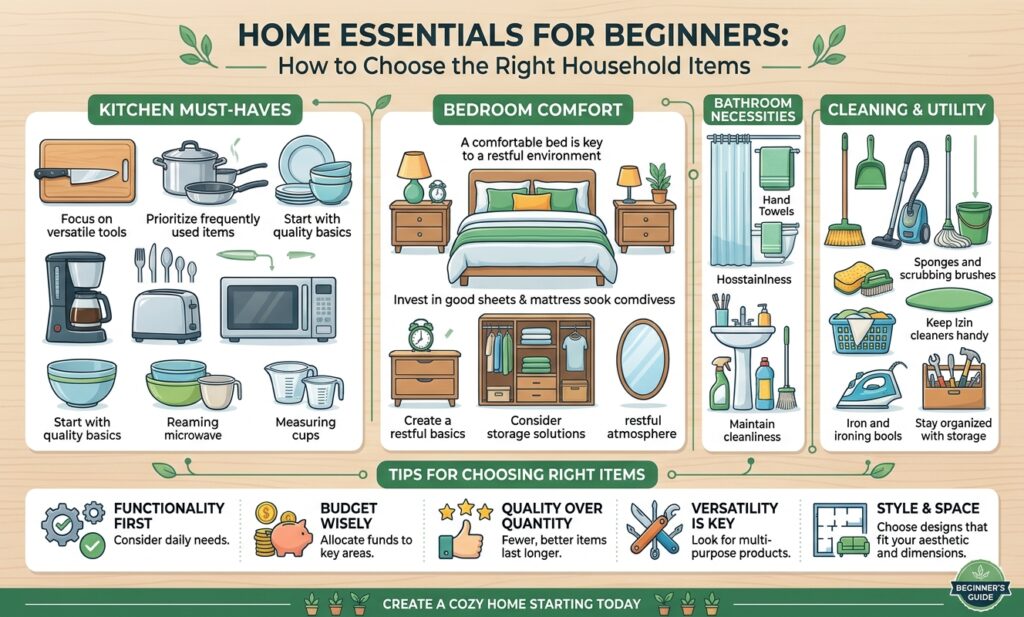

Moving into a new home or setting up your first independent living space is an important experience. However, creating a comfortable home involves more than purchasing furniture and decorating rooms. You also need practical household products that support everyday activities, including cooking, cleaning, sleeping, personal hygiene, and storage.
For beginners, choosing the right Home essentials can be challenging. Shopping stores and online marketplaces offer thousands of household products, each with different materials, features, designs, and prices. Without a clear purchasing plan, you might spend too much on unnecessary items while overlooking products that you genuinely need.
The smarter approach is to understand your household requirements before making purchasing decisions. Consider your available space, daily routine, family size, personal preferences, and budget. These factors will help you identify which products deserve priority.
What Are Home Essentials?
Home essentials are the everyday products, furniture, equipment, and supplies that help people maintain a comfortable and functional living environment. They support regular household activities and make it easier to manage different responsibilities.
These products include kitchen utensils, cookware, bedding, bathroom accessories, cleaning supplies, furniture, storage containers, and basic safety equipment.
Understanding Basic Household Items
Basic household items are products that help people complete everyday tasks. They can be divided into several categories according to their purpose and location.
Kitchen products: Plates, bowls, cooking pots, pans, knives, spoons, glasses, and food-storage containers help with meal preparation and serving.
Bedroom products: Mattresses, pillows, bedsheets, blankets, wardrobes, and laundry baskets support sleeping comfort and clothing organization.
Bathroom products: Towels, soap dispensers, toothbrush holders, toiletries, bath mats, and cleaning accessories support personal hygiene and bathroom maintenance.
Living room products: Sofas, chairs, tables, curtains, shelves, and lighting help create a practical space for relaxation and social activities.
Cleaning supplies: Brooms, mops, dusters, cleaning cloths, detergents, and waste bins help maintain household cleanliness.
Some products are required daily, while others are used occasionally. Understanding these differences allows beginners to organize their shopping priorities.
Why Every Beginner Needs Essential Home Products
A properly equipped home makes everyday responsibilities easier to handle. Having appropriate household products means you can prepare meals, organize personal belongings, maintain cleanliness, and create a comfortable place to rest.
Household essentials can also help you manage your living space more effectively. Storage containers, shelves, and wardrobes provide designated places for belongings, making Home essentials easier to reduce clutter.
Another important reason to consider household essentials is safety. Products such as first aid supplies, suitable electrical equipment, smoke alarms where required, and emergency lighting can contribute to a safer living environment.
The Difference Between Essential and Non-Essential Items
Understanding the difference between essential and non-essential products helps beginners make better purchasing decisions.
Essential items support regular household activities. Examples include cookware, basic furniture, bedding, towels, toiletries, cleaning equipment, and storage solutions.
Non-essential products generally provide additional convenience, decoration, entertainment, or luxury. Examples may include decorative ornaments, expensive kitchen gadgets, additional furniture, and specialized appliances.
What Are the Must-Have Home Essentials for Beginners?
Setting up a home becomes easier when you organize purchases according to individual rooms. Each area serves a different purpose, so its products should support the activities performed there. Beginners should start with the kitchen, bedroom, bathroom, living room, and basic cleaning supplies.
Essential Kitchen Items for Everyday Cooking
The kitchen is one of the most important areas of a home because Home essentials supports food preparation, cooking, and meal organization.
You do not need an expensive collection of appliances to create a functional kitchen. A few reliable utensils and appropriately sized cooking products can handle many everyday tasks.
Consider starting with these kitchen essentials:
- Plates, bowls, and drinking glasses.
- Spoons, forks, and basic serving utensils.
- Cooking pots and frying pans.
- A suitable kitchen knife and cutting board.
- A spatula and cooking spoon.
- A colander or strainer.
- Food-storage containers with suitable lids.
- Dishwashing liquid and cleaning sponges.
- Kitchen towels and a drying rack.
- A waste bin.
When selecting cookware, consider its material, construction, heat compatibility, and cleaning requirements. A product should be suitable for your cooking method and household needs.
Food-storage containers are also useful for organizing ingredients and storing leftovers. Choose containers designed for their intended purpose and follow their care instructions. Not every container is suitable for microwave heating or high temperatures.
Bedroom Essentials for Comfort and Better Sleep
Your bedroom should provide a comfortable environment for sleeping, resting, and organizing personal belongings. When choosing bedroom home essentials, prioritize products that support comfort and fit the available space.
The most important starting point is a suitable mattress. Consider its dimensions, construction, firmness, and personal comfort preferences before purchasing. A mattress should also fit the bed frame properly. Other useful bedroom essentials include:
- Comfortable pillows.
- Bedsheets and pillowcases.
- Blankets or quilts.
- A wardrobe or clothing storage solution.
- A bedside table.
- Curtains or window coverings.
- A laundry basket.
- Appropriate lighting.
- Storage boxes or shelves.
Bedding materials should be selected according to comfort, climate, and washing requirements. For warmer environments, lightweight and breathable fabrics may be practical.
Bathroom Essentials for Daily Hygiene
The bathroom requires products that support personal hygiene and regular cleaning. Beginners should prioritize basic toiletries, towels, and practical accessories. Useful bathroom home essentials include:
- Bath towels and hand towels.
- Soap, shampoo, and toothpaste.
- Toothbrushes and a toothbrush holder.
- Toilet paper.
- A soap dish or liquid soap dispenser.
- A toilet brush.
- A bath mat.
- A bathroom waste bin.
- A shower curtain, if necessary.
- Suitable bathroom cleaning supplies.
Choose towels according to their size, material, absorbency, and washing requirements.
Living Room Essentials for a Comfortable Home
The living room is often used for relaxation, family activities, entertainment, and welcoming visitors. Its furniture should support these activities while leaving enough space for comfortable movement. Useful living room essentials include:
- A sofa or suitable seating arrangement.
- Chairs, depending on available space.
- A coffee table or side table.
- Curtains or window coverings.
- Appropriate lighting.
- Storage shelves or cabinets.
- A television stand, if required.
- Cushions for additional comfort.
- A waste bin.
Furniture selection should begin with room measurements. Consider the dimensions of sofas, tables, and storage units before purchasing them.
Cleaning and Laundry Supplies for Home Maintenance
Regular cleaning is an important part of maintaining a comfortable household. Having appropriate cleaning and laundry supplies makes routine responsibilities easier.
Beginners can start with a basic collection of products rather than purchasing several specialized cleaners. Useful cleaning home essentials include:
- A broom and dustpan.
- A mop and bucket.
- Cleaning cloths.
- Microfiber towels.
- A suitable surface cleaner.
- A toilet brush.
- Cleaning gloves.
- A household waste bin.
- Laundry detergent.
- A laundry basket.
- A clothes-drying rack.
Different surfaces may require different cleaning methods. For example, products suitable for glass may not be appropriate for every wooden or painted surface.
How to Choose the Right Household Items
Choosing suitable household products requires more than comparing attractive designs or selecting the lowest price. A thoughtful decision should consider usefulness, material quality, durability, dimensions, maintenance, and safety.
Identify Your Daily Household Needs
Before purchasing anything, identify the activities you regularly perform at home. Think about your cooking habits, sleeping arrangements, cleaning routine, storage requirements, and available space. Make a separate list for each room and identify products you already own.
Consider Quality, Durability, and Materials
Quality and durability are important considerations when selecting home essentials. A low-priced product may appear attractive initially, but its construction, material, and maintenance requirements should also be evaluated. Before purchasing, examine:
- Material and construction.
- Product dimensions.
- Weight and stability, where relevant.
- Cleaning and maintenance requirements.
- Manufacturer instructions.
- Warranty information, if available.
- Expected replacement or repair costs.
Think about how frequently you will use the product. Items used every day may deserve more attention than products used only occasionally.
Choose Practical and Easy-to-Use Products
A useful household product should make daily activities easier rather than create additional difficulties. Consider whether an item is easy to operate, clean, store, and maintain.
Similarly, a multipurpose storage unit can help organize belongings without taking up unnecessary space. Check the product’s dimensions, weight, instructions, and intended use. For electrical appliances, consider electrical compatibility and installation requirements.
Compare Different Brands and Product Options
Comparing several brands and product options can help you understand differences in quality, price, features, and warranty coverage.
Avoid choosing a product simply because Home essentials has an attractive appearance or a familiar brand name. Instead, compare similar products using their actual specifications. Important comparison factors include:
- Price and additional purchasing costs.
- Material and construction.
- Dimensions and capacity.
- Product features.
- Energy requirements for appliances.
- Warranty and service availability.
- Replacement-part availability.
- Cleaning and maintenance requirements.
Check Product Reviews Before Purchasing
Customer reviews can provide useful information about real-world product performance. They may help you understand whether a household item is comfortable, durable, easy to clean, or suitable for its advertised purpose.
Read several detailed reviews instead of relying only on star ratings. Look for repeated complaints, specific product problems, and comments about long-term use.
Check whether reviews refer to the exact model you intend to purchase. Different versions of the same product may have different features or specifications.
Home essentials is also important to consider the source of the review. Independent consumer information, manufacturer documentation, and detailed customer experiences can provide different types of useful evidence.
How to Buy Home Essentials on a Budget
Creating a functional home does not require purchasing every household product immediately. With a realistic spending plan, beginners can gradually collect the products they need without putting unnecessary pressure on their finances.
Create a Household Shopping Checklist
A household shopping checklist helps you organize purchases and avoid forgetting important products. Start by dividing your list into categories:
Kitchen: Cookware, plates, utensils, glasses, and food-storage containers.
Bedroom: Mattress, pillows, bedding, wardrobe, and laundry basket.
Bathroom: Towels, toiletries, bathroom accessories, and cleaning products.
Living room: Seating, curtains, tables, lighting, and storage.
Cleaning: Broom, mop, detergent, cleaning cloths, and waste bins.
Next, identify products you already own and remove unnecessary duplicates.
Divide the remaining items into immediate necessities, future purchases, and optional upgrades.
Prioritize Essential Items Over Luxury Products
When your budget is limited, purchasing priorities become especially important. Start with products that support sleeping, cooking, hygiene, cleaning, and basic household organization.
Consider the practical value of each purchase. Ask yourself whether the item is necessary for daily activities, whether you already own something similar, and how frequently you expect to use Home essentials.
Once your basic requirements are covered, you can gradually purchase additional products that improve convenience and comfort.
Compare Prices and Look for Discounts
Comparing prices across different stores and online marketplaces can help you find suitable household products within your budget.
The advertised price does not always represent the final cost. Delivery charges, installation expenses, taxes, and additional accessories may increase your total spending. Seasonal discounts and promotional offers can provide savings, but only purchase items that you genuinely need.
Avoid Unnecessary Household Purchases
One of the easiest ways to control household spending is to avoid purchasing products without a clear purpose. Before buying something, consider whether Home essentials solves a problem or supports an activity you regularly perform.
Check your existing belongings to see whether another product can perform the same function. Avoid purchasing large quantities of consumable products before understanding how quickly your household uses them.
Common Mistakes Beginners Should Avoid When Buying Household Items
Setting up a home involves many decisions, and beginners can easily make purchasing mistakes. Understanding these common problems can help you save money and select more suitable household products.
Buying Too Many Items at Once
Purchasing everything immediately may seem convenient, but Home essentials can create unnecessary financial pressure.
You may also discover that certain products are not useful after spending some time in your new home. Start with essential items for cooking, sleeping, hygiene, and cleaning.
Choosing Cheap Products Without Checking Quality
A low price does not automatically make a product a good purchase. Some inexpensive products may have unsuitable materials, poor construction, limited warranties, or higher maintenance requirements.
Before buying, examine the product’s specifications, construction, and intended use. Consider whether the item can handle the activities for which you need Home essentials.
Ignoring Product Size and Available Space
A product may look attractive in a store or online photograph but still be unsuitable for your home. This is especially important when purchasing beds, sofas, wardrobes, dining tables, shelves, and large appliances.
Measure the available space before ordering furniture or equipment. Also consider doorways, staircases, windows, walking areas, and the space required to open drawers and doors.
Overlooking Maintenance and Replacement Costs
The initial purchase price is only one part of the total cost of owning a household product. Some appliances require electricity, filters, servicing, or replacement parts. Certain furniture materials also need special cleaning products or maintenance.
Before purchasing, review the manufacturer’s care instructions and warranty information. For appliances, consider energy consumption, repair availability, and expected maintenance requirements. For furniture and household accessories, check whether replacement components are available when necessary.
Tips for Organizing and Maintaining Household Essentials
Purchasing suitable products is only the beginning of creating a functional home. Proper organization and regular maintenance help you use your belongings effectively while keeping your living environment manageable.
Keep Frequently Used Items Within Reach
Products used regularly should be stored in convenient locations. Less frequently used products can be stored in designated cabinets or shelves. This arrangement reduces the time spent searching for belongings and makes everyday activities more convenient.
Organize Household Products by Category
Grouping similar household products together makes storage easier and reduces clutter. In the kitchen, separate cooking utensils, tableware, and food-storage containers. In the bedroom, organize clothes, bedding, and personal belongings into designated storage areas.
In the bathroom, keep toiletries, towels, and cleaning equipment separate. Shelves, baskets, cabinets, and labeled containers can help create a consistent organization system.
You do not need to purchase expensive storage accessories. Begin with available shelves and cabinets, then add organizers when a genuine need appears.
Clean and Maintain Items Regularly
Regular cleaning helps keep household products in suitable condition and removes accumulated dirt. Different materials require different cleaning methods, so check manufacturer instructions before using cleaning products. Wash towels, bedsheets, and clothing according to their care labels. Clean kitchen utensils after use and remove food residue from preparation areas.
The Centers for Disease Control and Prevention explains that regular cleaning with appropriate soap or detergent removes dirt and many germs from household surfaces. Disinfection is not necessarily required for every surface in every situation.
Replace Damaged or Expired Household Products
Household products experience wear and tear through regular use. Some become damaged, while others have expiration dates or recommended replacement periods.
Check your belongings periodically for visible damage, leaks, loose parts, or other problems that may affect their performance.
Read more: Window Design for Home: How to Choose the Perfect Windows for Every Room
How to Build a Functional Home Step by Step
Creating a comfortable home is a gradual process. Beginners do not need to purchase everything immediately. A room-by-room approach can make household planning easier and help you use your available budget more effectively.
Start With the Most Important Rooms
Begin with the rooms that support your most frequent daily activities. For many households, the kitchen, bedroom, and bathroom deserve early attention because they are directly connected to cooking, sleeping, and personal hygiene.
Make sure these areas contain the basic products needed for everyday use. Once they are functional, move on to the living room, additional storage, and optional household accessories.
Purchase Essentials According to Your Lifestyle
Your household purchases should reflect the way you actually live. Someone who cooks regularly may need more kitchen equipment than someone who rarely prepares meals at home.
A family with children may require additional storage and suitable safety products, while someone living alone may prefer smaller furniture and fewer household supplies. Consider your household size, available space, daily habits, climate, and personal preferences.
Upgrade Your Household Items Over Time
After establishing a basic household setup, you can gradually improve your home. You might add useful appliances, upgrade storage furniture, replace worn-out products, or purchase accessories that improve comfort. Before making an upgrade, identify the problem you want to solve.
Final Thoughts
Creating a functional home is not about purchasing the largest number of products or selecting the most expensive brands. Home essentials is about understanding your daily requirements and choosing household items that make everyday activities easier.
For beginners, the best approach is to start with essential kitchen supplies, suitable bedding, bathroom necessities, basic furniture, and cleaning equipment. Once these requirements are covered, additional products can be introduced gradually according to personal preferences and available budgets.
Before purchasing anything, compare product specifications, check dimensions, evaluate materials, and consider long-term maintenance. Reading customer reviews and understanding product instructions can also help you avoid unsuitable purchases.
FAQs About Home Essentials
1. What Are the Most Important Home Essentials for Beginners?
The most important home essentials include basic kitchen utensils, cookware, bedding, pillows, towels, toiletries, cleaning supplies, and suitable storage products. Basic safety equipment and first aid supplies are also useful considerations.
2. How Much Should Beginners Spend on Household Essentials?
There is no fixed budget that works for every household. Spending depends on the size of your home, number of residents, existing furniture, product choices, and local prices.
3. Which Household Items Should I Buy First?
Start with products needed for sleeping, cooking, personal hygiene, and basic cleaning. These may include a mattress, bedding, cookware, cooking utensils, plates, glasses, towels, toiletries, and cleaning equipment.
4. How Can I Choose High-Quality Household Products?
Evaluate the product’s materials, construction, dimensions, specifications, and care instructions before purchasing. Compare several options and read customer reviews from different sources.
5. What Household Items Are Worth Investing In?
Products used frequently and directly connected to everyday household activities are often worth prioritizing.