
Starting a business from home can be a practical way to turn your skills, interests, and ideas into an income-generating opportunity. You do not necessarily need an expensive office, a large team, or significant investment to get started. Many entrepreneurs begin with a computer, an internet connection, and a service or product that solves a genuine customer problem.
However, building a successful business requires more than choosing an interesting idea. You need to research the market, understand your customers, manage your budget, and create an effective marketing strategy. Whether you want to work independently or develop a long-term company, learning How to Start a Business from Home can help you make informed decisions and avoid common beginner mistakes.
What Does It Mean to Start a Business from Home?
A home-based business is an activity operated primarily from the owner’s residence. Instead of renting a separate office, you use a suitable area at home to manage services, products, customers, and daily operations. How to Start a Business from Home involves choosing the right business idea, preparing a workspace, managing startup costs, and developing strategies to attract customers and grow your business.
Why People Choose to Start Businesses from Home
People choose home-based businesses for different reasons. Some want additional income, while others want greater independence and control over their working schedules. Operating from home can also reduce commuting and commercial office expenses.
Digital technology has created opportunities for people to provide services and sell products without maintaining a traditional workplace. However, the right business depends on your skills, available resources, and customer demand.
Benefits of Running a Business from Home
A home-based business can offer several advantages:
- Lower operating costs: You may avoid separate office rental expenses.
- Flexible working hours: You can organize your schedule around personal responsibilities.
- Greater independence: You can manage business decisions and daily activities.
- Convenient operations: Many services can be delivered through digital platforms.
- Growth opportunities: You can begin with a small operation and expand gradually.
These benefits are useful, but success still requires consistent work, financial discipline, and customer satisfaction.
How to Start a Business from Home: Step-by-Step Guide
Identify Your Skills, Interests, and Strengths
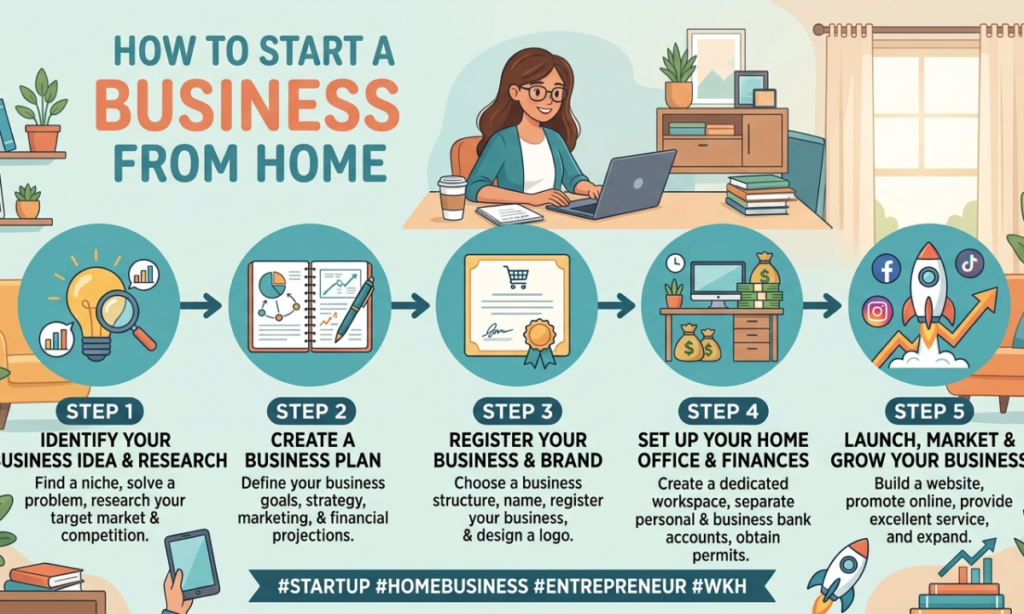
One of the first steps in learning How to Start a Business from Home is identifying what you can do well. Consider your education, professional experience, hobbies, and personal interests when choosing a business idea. Select an opportunity that matches your abilities and that you are willing to develop over time. Starting with existing knowledge can reduce the learning required during the early stages and help you build confidence. It also allows you to focus on providing quality products or services while gradually improving your business skills.
Research Profitable Business Ideas
Before investing money, investigate whether people are interested in your proposed product or service. Research competitors, customer reviews, pricing, and market demand.
Choose Your Target Audience
Your target audience is the group of people most likely to purchase from your business. Identify their needs, preferences, location, and purchasing habits.
Create a Simple Business Plan
A business plan explains how your business will operate and develop. How to Start a Business from Home does not need to be complicated when you are starting small. Include your business idea, target audience, products or services, pricing, competitors, marketing methods, and financial estimates. Set realistic short-term goals, such as finding your first three customers or completing your first ten orders. A clear plan gives you direction and makes How to Start a Business from Home easier to measure progress.
Calculate Your Startup Costs and Budget
Estimate how much money you need before launching. Common expenses include equipment, internet services, website hosting, software, supplies, advertising, and applicable registration fees. Separate one-time purchases from recurring expenses. For example, purchasing a laptop may be a startup expense, while monthly internet and software subscriptions are ongoing costs.
Choose a Business Name and Brand Identity
Select a business name that is memorable, easy to pronounce, and relevant to your services. Check whether another company already uses the name and whether a suitable domain is available. Create a consistent brand identity using a simple logo, suitable colors, and professional communication. Consistent branding helps customers recognize your business across your website, social media profiles, and promotional materials.
Understand Legal Requirements and Registration
Research the legal requirements that apply to your business and location. Depending on your country and industry, you may need business registration, licenses, permits, or tax registration. Certain activities, such as food production and regulated product sales, may have additional requirements. Contact the appropriate local authorities before beginning operations.
Best Business Ideas You Can Start from Home
Start a Freelancing Business
Freelancing is a suitable opportunity for people with skills in writing, programming, translation, web development, and proofreading. When exploring How to Start a Business from Home, consider offering services that match your experience and professional abilities. Create a portfolio that demonstrates your skills and approach potential clients through professional networks or freelancing platforms. Start with services you can deliver confidently and focus on meeting deadlines, maintaining quality, and communicating professionally.
Start a Blogging and Affiliate Marketing Business
Blogging allows you to publish helpful information about subjects such as technology, business, education, and lifestyle. You can potentially earn through advertising, sponsored content, and affiliate marketing. Affiliate marketing involves earning commissions through qualifying purchases made using your referral links. However, building traffic and income takes time, consistent publishing, and audience trust.
Offer Online Teaching and Tutoring Services
If you understand a particular subject, consider teaching students online. You can offer mathematics, English, science, computer skills, or other lessons through video conferencing platforms. Prepare learning materials, establish reasonable prices, and create a consistent lesson schedule.
Sell Handmade Products and Crafts
If you enjoy creative activities, you can sell handmade decorations, customized gifts, artwork, accessories, or clothing items. Begin with a small product collection. Calculate material and packaging costs, take clear photographs, and provide accurate product descriptions to attract interested buyers.
Start an E-commerce Business
An e-commerce business involves selling products through an online store or marketplace. Possible products include clothing, accessories, stationery, and household items. Research suppliers, delivery arrangements, product demand, and competition before purchasing inventory. Clear product descriptions and customer service policies can improve the shopping experience.
Provide Virtual Assistant Services
Virtual assistants help businesses with remote administrative work, including email management, scheduling, document preparation, and customer communication. This opportunity can suit organized individuals with good communication and computer skills.
Offer Graphic Design and Digital Marketing Services
Businesses need visual content and online marketing support. If you have suitable skills, you can offer logo design, social media graphics, website design, SEO, and content creation. Prepare sample projects to demonstrate your abilities and explain exactly what customers receive with each service.
How Much Money Do You Need to Start a Home Business?
Starting a Business with a Small Budget
Some home-based businesses require relatively few resources. Freelancing, content writing, and virtual assistance may be possible using equipment you already own.
Essential Tools and Equipment
Depending on your business, you may need:
- A laptop or computer.
- A reliable internet connection.
- A smartphone for communication.
- A suitable desk and chair.
- Relevant business software.
- Packaging or production supplies when necessary.
Purchase essential equipment first and avoid unnecessary expenses.
Understanding Initial and Monthly Expenses
Initial expenses may include equipment, registration, website development, and inventory. Monthly expenses can include internet bills, subscriptions, advertising, utilities, and supplies. Preparing a detailed expense list helps you understand how much money is required to operate your business.
Managing Your Business Finances
Keep records of income, purchases, customer payments, and operating expenses. Use a spreadsheet or accounting software to monitor your financial position. Where practical, separate personal and business finances. Review your budget regularly and avoid spending all your earnings without considering future expenses.
How to Set Up an Effective Home Business Workspace
Choose a Suitable Working Area
Choose a quiet location where you can concentrate. A separate office is helpful, but a small organized corner can also work for many home-based businesses.
Organize Your Equipment and Office Supplies
Keep documents, equipment, and supplies organized. Use folders, shelves, and storage boxes to make everyday work easier and reduce unnecessary distractions.
Create a Productive Daily Work Schedule
Prepare a daily timetable that includes business tasks, customer communication, marketing, and breaks. Set achievable deadlines and prioritize important responsibilities.
Maintain a Healthy Work-Life Balance
Set clear working hours and avoid allowing business activities to interfere constantly with personal responsibilities. Taking breaks and maintaining boundaries can support a more sustainable routine.
How to Promote and Market Your Home-Based Business
Create a Professional Business Website
Creating a professional website is an important step when learning How to Start a Business from Home. A website gives potential customers a central place to explore your products, services, and business information. Include clear service descriptions, contact details, pricing information where appropriate, and useful content that answers customer questions.
Use Social Media Marketing
Create business profiles on platforms where your target audience is active. Share product photographs, helpful information, business updates, and genuine customer feedback. Respond to questions professionally and publish relevant content consistently.
Apply Search Engine Optimization (SEO)
SEO helps search engines understand your website and its content. Research relevant keywords, write descriptive page titles, organize headings, and publish useful articles that answer customer questions. Follow Google’s SEO Starter Guide for practical optimization recommendations. Remember that SEO improvements do not guarantee specific rankings.
Use Content Marketing to Build Trust
Publish informative blog posts, tutorials, videos, and social media updates related to your business. For example, a graphic designer could share branding tips, while an online tutor could publish educational explanations. Focus on solving customer problems instead of making every post promotional.
Attract Your First Paying Customers
Start by introducing your business to relevant communities and potential customers. Create sample work, explain your services clearly, and provide transparent pricing. Deliver quality work, request honest feedback, and use customer experiences to improve your offerings.
Common Mistakes to Avoid When Starting a Business from Home
Starting Without Proper Market Research
Choosing an idea without checking customer demand can waste time and money. Research competitors, understand customer needs, and test your idea before making significant investments.
Ignoring Business Planning and Budgeting
Without a plan, you may overlook important expenses or spend money on unnecessary purchases. Prepare a realistic budget and review your progress regularly.
Mixing Personal and Business Finances
Combining personal and business transactions can make financial records confusing. Maintain separate records and track all business-related payments.
Poor Time Management
Household responsibilities and distractions can interrupt business activities. Create a daily schedule, prioritize important tasks, and follow realistic deadlines.
Expecting Immediate Profits
A new business may take time to attract customers and cover expenses. Avoid unrealistic income expectations and focus on improving your products, services, and marketing strategy.
Read more: Small Scale Business Ideas: How to Choose the Right Business for You
Tips for Growing a Successful Home-Based Business
Focus on Customer Satisfaction
Listen to customer feedback, answer questions, and provide dependable support. Positive customer experiences can encourage repeat purchases and recommendations.
Deliver Quality Products and Services
Maintain consistent quality and provide accurate descriptions of what you offer. Check products and completed work before delivery.
Improve Your Skills and Knowledge
Continue learning through professional resources, online courses, and tutorials. Improving your technical, communication, and marketing skills can help your business remain competitive.
Build Strong Customer Relationships
Communicate clearly, understand customer needs, and provide helpful service. Strong relationships can support customer loyalty and improve your business reputation.
Reinvest Profits into Business Growth
Use part of your profits to improve equipment, develop your website, expand products, or invest in marketing. Evaluate each investment carefully before spending money.
Advantages and Disadvantages of Starting a Business from Home
| Advantages | Disadvantages |
| Lower Startup Costs: Reduces expenses for office rent, utilities, and other operational costs. | Home Distractions: Family activities and household responsibilities can interrupt work. |
| Flexible Working Hours: Allows business owners to create schedules that suit their personal needs. | Limited Workspace: A home environment may not provide enough room for business operations. |
| Greater Independence: Provides more control over business decisions and daily activities. | Work-Life Balance: Separating professional responsibilities from personal life can be difficult. |
| Convenient Operations: Eliminates daily commuting and saves time and transportation costs. | Customer Acquisition: Finding and retaining customers may require consistent marketing efforts. |
| Easy Business Management: Makes How to Start a Business from Home possible to manage many activities from one location. | Professional Image: Some customers may prefer businesses with dedicated offices or commercial locations. |
| Small-Scale Growth: Allows entrepreneurs to start with limited resources and expand gradually. | Legal Restrictions: Certain home-based activities may require permits or approval under local regulations. |
| Family Flexibility: Can make it easier to manage family responsibilities alongside business activities. | Limited Networking: Working from home may reduce opportunities for face-to-face professional connections. |
Conclusion
Learning How to Start a Business from Home is an important first step toward becoming an entrepreneur and building a successful business. By choosing the right business idea, researching your target market, creating a realistic business plan, and managing your budget carefully, you can establish a strong foundation for long-term growth.
Starting from home offers several benefits, including lower startup costs, flexible working hours, and greater independence. However, it is equally important to understand potential challenges such as household distractions, limited workspace, customer acquisition, and legal requirements.
FAQs
1. How to Start a Business from Home as a Beginner?
Ans: Start by choosing a suitable business idea, researching your target market, and creating a simple business plan. Begin with a small budget and gradually expand your operations.
2. What Is the Best Business to Start from Home?
Ans: Popular options include blogging, freelancing, online tutoring, dropshipping, handmade products, and digital marketing. Choose an idea based on your skills, interests, and budget.
3. How Much Money Do I Need to Start a Home-Based Business?
Ans: The startup cost depends on your business type and requirements. Some online businesses can begin with a small investment, while others require equipment or inventory.
4. Do I Need a License to Start a Business from Home?
Ans: Licensing requirements depend on your location, business activities, and local regulations. Check the applicable rules before starting your operations.
5. How Can I Promote My Home-Based Business?
Ans: You can promote your business through social media, SEO, email marketing, and a professional website. Focus on providing quality products or services to build customer trust.