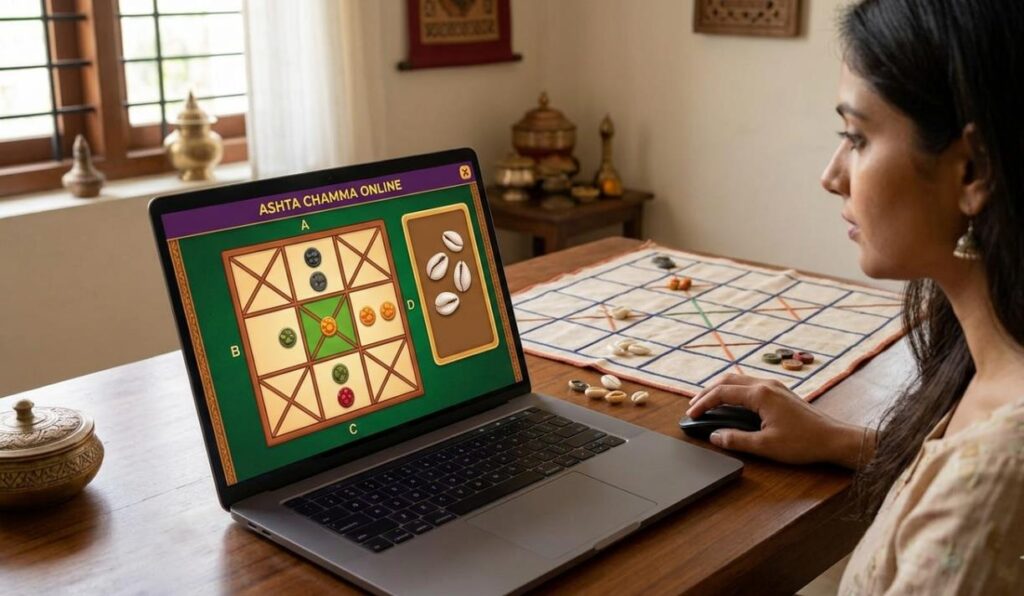

Ashta Chamma Game is one of India’s oldest and most fascinating traditional board games. Long before modern board games and mobile gaming apps became popular, families across South India gathered to enjoy this strategic and entertaining pastime. Combining luck, planning, and tactical decision-making, the game offers an engaging experience for players of all ages.
Today, interest in traditional games is growing again as people look for cultural activities that encourage social interaction and critical thinking. Whether you are a beginner who wants to learn the basics or an experienced player looking to improve your strategy, this guide covers everything you need to know.
You’ll discover the history of the Ashta Chamma Game, its rules, gameplay mechanics, winning strategies, cultural significance, and practical tips that can help you become a better player.
What Is the Ashta Chamma Game?
The Ashta Chamma Game is a traditional Indian race board game played using a cross-shaped board, player tokens, and cowrie shells. The primary objective is to move all your pieces around the board and safely bring them to the home area before your opponents.
Unlike many modern games that rely heavily on chance, this game requires players to make strategic decisions throughout the match. Knowing when to advance, defend, or capture an opponent’s piece can significantly influence the outcome.
Why Is It Called Ashta Chamma?
The word “Ashta” means eight in Sanskrit, while “Chamma” refers to the counting system used in the game. The name is associated with the maximum score obtained when tossing cowrie shells.
Why Is the Game Still Popular?
Several factors contribute to its lasting popularity:
- Easy to learn but difficult to master
- Suitable for both children and adults
- Encourages strategic thinking
- Preserves cultural traditions
- Requires minimal equipment
Read More: Insightfulmagazine com 2026: Complete Insight into Features and Trust Guide
History and Origin of the Ashta Chamma Game
The Ashta Chamma Game has deep roots in Indian culture and is believed to have been played for centuries. Historians often classify it among the ancient race games that evolved across South Asia.
The game is especially popular in the southern states of India, including Andhra Pradesh, Telangana, Karnataka, and Tamil Nadu. Traditionally, it was played during festivals, family gatherings, and social events.
Cultural Importance
One aspect often overlooked by competitor articles is the game’s role in cultural preservation. Traditional board games served as educational tools, helping younger generations develop counting skills, patience, and strategic thinking while strengthening family bonds.
Connection to Modern Games
Many gaming historians believe that modern race games such as Ludo share conceptual similarities with traditional games like Ashta Chamma. While the mechanics differ, both involve moving pieces around a board toward a final destination.
Equipment Needed to Play
To play the Ashta Chamma Game, you need only a few simple items.
Game Board: The board typically features a cross-shaped design with designated pathways and safe zones.
Playing Pieces: Each player receives a set of tokens. Different colors help distinguish between players.
Cowrie Shells: Traditionally, players use cowrie shells instead of dice. The number of shells landing in a particular position determines movement.
Number of Players: The game is commonly played with:
- 2 players
- 3 players
- 4 players
However, local variations may allow different player counts.
Ashta Chamma Game Setup
Before starting the game, all participants must prepare the board and place their pieces in their respective starting positions.
Step 1: Arrange the Board: Place the board on a flat surface where all players can easily reach it.
Step 2: Assign Tokens: Each player chooses a unique set of pieces.
Step 3: Determine Turn Order: Players toss the cowrie shells to determine who goes first.
Step 4: Understand Safe Squares: Safe squares protect tokens from being captured by opponents. Understanding these locations is essential for effective gameplay.
Rules of the Ashta Chamma Game
Learning the rules of the Ashta Chamma Game is relatively straightforward.
Basic Rules
- Each player starts with pieces in the home area.
- Cowrie shell throws determine movement.
- Players move pieces according to the count obtained.
- Opponent pieces can be captured on non-safe squares.
- The first player to bring all pieces home wins.
Movement Rules
Players move their pieces along a fixed path around the board.
Capturing Opponents
If a player’s token lands on an opponent’s piece outside a safe square, the opponent’s piece is sent back to the starting area.
Winning the Game
Victory is achieved by successfully bringing all tokens to the final home position before other players.
How to Play Ashta Chamma Game Step by Step
Step 1: Begin the Match: Players take turns tossing cowrie shells.
Step 2: Move Your Token: Based on the result, move one of your available pieces.
Step 3: Make Strategic Decisions: A key difference between average and skilled players is decision-making. Sometimes protecting a token is more valuable than advancing aggressively.
Step 4: Capture Opponents: Whenever possible, capture exposed opponent pieces to slow their progress.
Step 5: Use Safe Squares Wisely: Safe squares provide protection and should be incorporated into your strategy.
Step 6: Reach Home: Continue moving pieces until all have successfully reached the home area.
Understanding the Scoring System
The traditional scoring system depends on the outcome of the cowrie shell toss. Different regions may use slightly different scoring methods, but the basic concept remains consistent.
Typical Movement Outcomes
| Cowrie Shell Result | Movement Value | Strategic Importance |
| One shell open | Low move | Safe advancement |
| Two shells open | Moderate move | Balanced positioning |
| Three shells open | Strong move | Offensive opportunities |
| Four shells open | High move | Rapid advancement |
| Special combination | Bonus move | Tactical advantage |
Best Winning Strategies
Many articles explain the rules but fail to discuss advanced tactics. Here are several proven strategies.
Balance Attack and Defense: Aggressive play can help capture opponents, but overextending often leaves your pieces vulnerable.
Move Multiple Pieces: Avoid focusing on a single token. Distributing progress across multiple pieces creates flexibility.
Control Safe Zones: Experienced players use safe squares as strategic checkpoints rather than merely defensive positions.
Observe Opponent Patterns: Watch how opponents move their pieces. Anticipating their decisions provides a significant advantage.
Think Several Moves Ahead: Strong players evaluate future possibilities before making a move rather than reacting only to the current turn.
Ashta Chamma vs Ludo
Many beginners compare the Ashta Chamma Game to Ludo because both involve moving tokens around a board.
| Feature | Ashta Chamma | Ludo |
| Origin | Ancient India | Modern adaptation |
| Movement Tool | Cowrie shells | Dice |
| Strategic Depth | High | Moderate |
| Cultural Value | Very high | Moderate |
| Traditional Use | Festivals and gatherings | Casual family game |
Variations of the Ashta Chamma Game

One of the most interesting aspects of the Ashta Chamma Game is that it has evolved differently across various regions. While the core objective remains the same, local communities have introduced unique rules and gameplay styles over time.
Regional Variations
In Andhra Pradesh and Telangana, the game is often played using cowrie shells and follows traditional movement rules. In some regions of Karnataka and Tamil Nadu, slight changes in scoring and movement patterns can be found.
Different Board Designs
Traditional boards were often hand-drawn on cloth, wood, or even directly on the floor using chalk or colored powder. Today, printed boards and digital versions are widely available.
Home Rules
Many families have developed their own house rules over generations. These may include:
- Alternative scoring systems
- Bonus turns for specific shell combinations
- Additional safe squares
- Modified winning conditions
These variations make every game session unique and add to the cultural richness of the experience.
Benefits of Playing Ashta Chamma
Modern research on board games consistently shows that strategic games help develop cognitive and social skills. The Ashta Chamma Game is no exception.
Improves Strategic Thinking: Players must constantly evaluate risk versus reward. Every move requires consideration of possible future outcomes.
Enhances Decision-Making Skills: Because multiple pieces can often be moved, players must decide which option provides the greatest advantage.
Develops Patience: Unlike fast-paced digital games, traditional board games encourage thoughtful decision-making and patience.
Strengthens Family Bonds: The game is often played during family gatherings and festivals, creating opportunities for meaningful social interaction.
Encourages Healthy Competition: Players learn how to handle both victory and defeat gracefully while improving their strategic abilities.
Preserves Cultural Heritage: Traditional games are an important part of cultural identity. Playing and teaching them helps preserve valuable traditions for future generations.
Can You Play Ashta Chamma Online?
As technology continues to evolve, traditional games are finding new audiences through digital platforms.
Mobile Applications
Several developers have created digital versions of the game for smartphones and tablets. These applications allow players to enjoy traditional gameplay without needing physical equipment.
Online Multiplayer Options
Some platforms offer online multiplayer modes where friends and family members can compete remotely.
Benefits of Online Play
Digital versions provide several advantages:
- Easy accessibility
- Practice opportunities
- Multiplayer functionality
- Automated scoring
- Interactive tutorials
However, many enthusiasts still prefer the traditional version because it provides a more authentic and social experience.
Common Mistakes New Players Make
Many beginners struggle not because the rules are difficult, but because they make avoidable strategic errors.
Focusing on One Piece: Moving only one token throughout the game limits flexibility and increases risk.
Ignoring Safe Squares: Safe zones are among the most valuable positions on the board. New players often underestimate their importance.
Over-Aggressive Play: Capturing opponents can be rewarding, but reckless attacks may expose your own pieces.
Lack of Planning: Successful players think several turns ahead instead of making impulsive decisions.
Failing to Adapt: Every game develops differently. Good players adjust their strategy based on the board situation.
Expert Recommendations for Better Gameplay
Many online articles stop after explaining the rules. However, experienced players understand that mastering the game requires deeper strategic awareness.
Create a Balanced Board Presence: Instead of rushing one token home, maintain several active pieces across the board. This increases tactical options.
Prioritize Safety When Necessary: Sometimes protecting a valuable token is more important than making an aggressive move.
Learn Probability Patterns: Although cowrie shell outcomes involve chance, experienced players understand likely movement scenarios and plan accordingly.
Watch Your Opponents: The strongest players study not only their own position but also the intentions of their opponents.
Develop Long-Term Plans: Think in terms of board control rather than individual moves. Consistent strategic positioning often wins more games than occasional lucky throws.
Unique Insights Missing from Many Competitor Articles
After analyzing common content on traditional board games, several valuable topics are often overlooked.
The Educational Value of Ashta Chamma
Many articles describe the rules but fail to explain how the game develops important life skills such as:
- Critical thinking
- Strategic planning
- Numerical reasoning
- Social interaction
- Risk management
Intergenerational Learning
The game provides a rare opportunity for grandparents, parents, and children to engage in the same activity regardless of age differences.
Cultural Preservation Through Gameplay
In an era dominated by digital entertainment, traditional games serve as living cultural artifacts that connect modern generations with their heritage.
Practical Example of Strategic Thinking
Imagine you have two options:
- Move a token closer to home.
- Capture an opponent’s exposed token.
Many beginners automatically choose advancement. However, experienced players recognize that eliminating an opponent’s progress may provide a greater long-term advantage.
Conclusion
The Ashta Chamma Game is far more than a traditional board game. It represents centuries of cultural heritage, family entertainment, and strategic thinking. Its simple rules make it accessible to beginners, while its tactical depth keeps experienced players engaged for years.
From understanding the history and setup to mastering advanced strategies, learning the Ashta Chamma Game offers both entertainment and educational value. Unlike many modern games that rely heavily on technology, it encourages face-to-face interaction, patience, and thoughtful decision-making.
Whether you are discovering this classic game for the first time or revisiting a cherished childhood memory, the Ashta Chamma Game remains one of the finest examples of traditional Indian gaming culture. By learning its rules, practicing its strategies, and sharing it with others, you help preserve a timeless tradition that continues to bring people together across generations.
FAQs
Q1: What is the Ashta Chamma Game?
Ans: The Ashta Chamma Game is a traditional Indian board game played using a cross-shaped board, player tokens, and cowrie shells. The objective is to move all tokens around the board and safely bring them home before opponents.
Q2: How many players can participate?
Ans: The game is commonly played by two to four players, although some regional variations allow additional participants.
Q3: Is Ashta Chamma the same as Ludo?
Ans: No. While both games involve moving pieces around a board, Ashta Chamma uses cowrie shells instead of dice and generally offers greater strategic depth.
Q4: What are cowrie shells used for?
Ans: Cowrie shells function as the movement mechanism. The way they land determines how many spaces a player may move.
Q5: Is the game suitable for children?
Ans: Yes. Children can easily learn the rules while developing counting skills, strategic thinking, and patience.
Q6: How long does a typical game last?
Ans: The duration depends on the number of players and rule variations, but most games last between 20 and 60 minutes.
Q7: Can the game be played online?
Ans: Yes. Several mobile applications and online platforms offer digital versions of the game for both solo and multiplayer play.
Q8: What is the best strategy for beginners?
Ans: Beginners should focus on moving multiple pieces, using safe squares effectively, and avoiding unnecessary risks.
Q9: Why is the game culturally important?
Ans: The game represents an important part of Indian cultural heritage and has been enjoyed by families for generations during festivals and social gatherings.



Pingback: Webinbound Com Explained: Complete Guide, Services, Features & Benefits