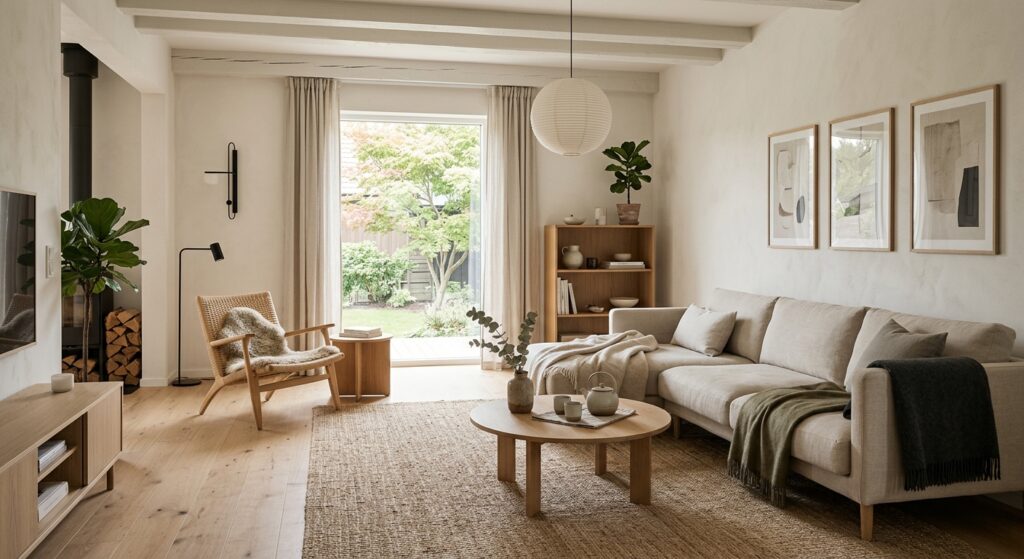

A living room does not need to be filled with furniture and decorations to feel complete. In many modern homes, a carefully edited space can feel more comfortable, practical, and visually balanced. This is where Japandi style offers an appealing approach to interior design. It combines Japanese minimalism with Scandinavian simplicity, functionality, natural materials, and warmth.
Rather than following a strict decorating formula, the approach focuses on selecting useful furniture, natural materials, muted colors, and a limited number of meaningful decorative pieces. Wood, linen, wool, ceramics, stone, plants, and simple forms can work together to create a living room that feels understated without becoming cold or empty.
What Is Japandi Style?
Japandi style is a hybrid interior-design aesthetic that combines elements of Japanese and Scandinavian design. Japanese interiors are often associated with simplicity, natural materials, uncluttered spaces, and craftsmanship, while Scandinavian design is commonly associated with functionality, clean lines, light woods, and comfortable interiors.
The combination creates a design language that is restrained but not necessarily stark. Natural materials provide warmth, while simple furniture and limited decoration help maintain visual order.
Understanding the Japandi Design Concept
The central idea behind Japandi style is intentional simplicity. Instead of adding objects simply because a surface looks empty, each item should have a useful or meaningful role.
For a living room, this could mean choosing one comfortable sofa instead of several oversized seats, using a practical coffee table, and keeping everyday items organized in suitable storage. The result is a room where function and appearance support one another.
Japanese Simplicity Meets Scandinavian Comfort
The Japanese side contributes restraint, organic materials, simple forms, and an appreciation for natural textures. The Scandinavian side brings functionality, lighter materials, clean lines, and a sense of comfort.
You can see this combination in a room with a simple wooden coffee table, a neutral upholstered sofa, a textured rug, and a small selection of ceramics or plants. None of these elements needs to dominate the room.
What Makes a Living Room Feel Japandi?
Several characteristics can give a living room this recognizable appearance. Neutral and earthy colors, natural materials, uncluttered layouts, functional furniture, organic shapes, and carefully selected decorative pieces are all commonly associated with the aesthetic.
The overall room should feel considered rather than crowded. Empty space is useful because it allows furniture, textures, and architectural features to remain visually clear.
The Key Elements of a Japandi Style Living Room
A successful Japandi style living room is not created by purchasing one particular type of sofa or table. It comes from combining several design principles consistently.
Minimalism With Purpose
Minimalism works best when it has a practical reason behind it. Removing unnecessary objects can make a room easier to organize, but the goal is not to make the space uncomfortable or completely empty.
Keep furniture that supports how you actually use the room. If you regularly read, for example, a comfortable chair and suitable lamp may be more valuable than another decorative table.
Natural Materials and Organic Textures
Natural materials are one of the strongest recurring characteristics of Japandi style. Wood, linen, wool, cotton, stone, ceramics, rattan, and bamboo are frequently used in Japandi interiors.
These materials also help create variety without relying on bright colors. A smooth wooden surface beside a woven basket and soft linen cushion can provide enough contrast to make a neutral room interesting.
Clean Lines and Simple Shapes
Furniture with clean lines helps maintain visual order. At the same time, organic or gently curved forms can soften a room that contains many straight edges. Both contemporary Japandi examples and design guides emphasize the use of simple forms and organic shapes.
For example, a straight sofa can be paired with a rounded coffee table or a curved floor lamp.
Functional Furniture
Furniture should have a clear purpose. Storage should help organize belongings, seating should be comfortable, and tables should provide useful surfaces.
This focus on functionality is one of the areas where Japanese and Scandinavian design principles overlap strongly.
Open Space and Visual Balance
Open space helps prevent a minimalist room from becoming visually crowded. You do not need a large living room to achieve this effect.
Start by keeping major walking paths clear and avoiding furniture that is too large for the room. Give important pieces enough surrounding space so that they remain visually distinct.
Choose a Warm Japandi Color Palette
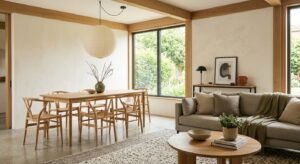
Color is one of the easiest ways to establish Japandi style. The palette generally favors muted, natural, and earthy colors rather than highly saturated shades.
Warm White, Cream, and Beige
Warm white, cream, and beige create a soft foundation for furniture and natural materials. A warm off-white can also feel less stark than a very bright white. These shades work especially well when paired with natural wood and textured fabrics.
Taupe, Greige, and Earthy Neutrals
Taupe, greige, oatmeal, stone, and soft brown can add depth without disrupting the restrained palette. Homes & Gardens specifically identifies beige, taupe, oatmeal, and stone as suitable Japandi living-room colors. Using several related shades can make the room feel layered while maintaining a cohesive appearance.
Natural Wood Tones
Wood is both a material and a color element in the room. Light oak can contribute to a brighter Scandinavian influence, while darker woods can introduce more contrast and depth.
Architectural Digest notes that Japandi interiors combine the lighter woods associated with Scandinavian design with the darker and earthy tones often found in Japandi Style interiors.
Muted Green and Other Nature-Inspired Accents
Muted green, soft blue, and other subdued nature-inspired colors can be used as accents. Homes & Gardens highlights pale pink, blue, green, and grey as possible subtle additions to a Japandi living room.
The important point is proportion. These colors can add personality without replacing the neutral foundation.
Using Black or Charcoal for Contrast
Black and charcoal can provide definition against lighter walls, upholstery, and wood. They work particularly well through small details such as lamp frames, picture frames, table legs, or decorative objects. A restrained dark accent can create contrast while keeping the overall palette understated.
Choose the Right Furniture for a Japandi Living Room
Furniture is central to the appearance and function of a Japandi style living room. Choose pieces that have simple silhouettes, useful functions, and materials that complement the natural character of the room.
Look for Low-Profile Sofas
Low-profile furniture is frequently associated with Japandi interiors. A sofa with a relatively simple silhouette can make the room feel visually lighter than an oversized, heavily detailed design. Choose upholstery in a restrained shade such as cream, beige, taupe, soft grey, or another muted tone.
Choose Simple Wooden Coffee Tables
A wooden coffee table can introduce warmth while keeping the room practical. Choose a simple rectangular, oval, or rounded design depending on the layout. The table does not need elaborate decoration. A small ceramic piece, book, or plant can be enough.
Use Functional Storage
Storage is important because visible clutter can work against the clean appearance of the room. Low cabinets, closed shelving, storage benches, and carefully organized open shelves can help keep everyday belongings under control. Choose storage that fits the room rather than adding large units simply because they look attractive.
Mix Soft Upholstery With Natural Wood
Combining hard and soft materials creates visual balance. A wooden coffee table can sit beside a fabric sofa, while linen cushions and a wool rug add softness. This approach prevents the room from becoming dominated by either hard surfaces or heavy textiles.
Prioritize Quality Over Quantity
The emphasis on craftsmanship and quality is frequently identified as part of Japandi style. Rather than filling a room with many inexpensive objects, consider selecting fewer pieces that are useful, durable, and visually compatible. This also gives the room a more intentional appearance.
Add Natural Materials and Texture
A neutral room needs texture to avoid looking flat. Natural materials are particularly effective because they add variation without requiring strong patterns or colors.
Bring in Warm Wood
Use wood through flooring, tables, shelving, cabinets, frames, or smaller accessories. Natural wood tones can provide warmth and visual continuity.
If you already have wooden flooring or furniture, you do not need to add wood everywhere. A few coordinated pieces may be enough.
Use Linen, Cotton, and Wool
Linen curtains, cotton cushions, and wool rugs can add softness and texture. These materials are repeatedly identified in sources discussing Japandi interiors.
Use them where they serve a purpose rather than treating every surface as an opportunity to add another textile.
Add Rattan, Bamboo, or Woven Details
Rattan and bamboo can introduce a natural woven texture. A basket, chair detail, lamp shade, or small accessory may provide enough of this material without making the room feel themed.
Introduce Stone and Handmade Ceramics
Stone can add a grounded, natural quality, while handmade ceramics can introduce craftsmanship and subtle variation.
A ceramic vase, bowl, or small sculptural object can work particularly well when the rest of the room has simple furniture. Handmade and imperfect-looking ceramics are specifically recommended in Japandi living-room guidance.
Layer Textures Without Creating Clutter
Layering does not mean adding everything at once. Start with the major materials—perhaps wood and upholstery—then add a rug, one or two cushions, and a small number of decorative objects.
Japandi Style Living Room Lighting Ideas
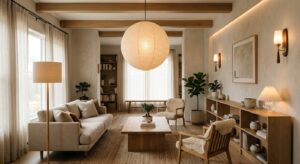
Lighting plays a major role in how a living room feels. Natural light is emphasized in Japandi design, while additional lighting can make the space more comfortable after dark.
Make the Most of Natural Light
Keep window treatments relatively simple where privacy and practical requirements allow. Sheer curtains can filter daylight while maintaining a light appearance.
If the room receives limited daylight, avoid blocking the available light with oversized furniture or heavy window coverings.
Choose Soft, Warm Lighting
Warm artificial light works well with wood, beige, cream, and natural textiles. Current interior-design guidance commonly recommends warm light around 2700K–3000K for comfortable living spaces. The exact choice should still depend on the room, fixtures, and personal preference.
Layer Floor, Table, and Pendant Lighting
Instead of depending on one ceiling fixture, combine different sources. A pendant can provide general illumination, while a floor lamp or table lamp can create more focused pools of light.
Use Simple Natural-Material Light Fixtures
Paper, fabric, wood, and other understated materials can complement the natural character of the room. Choose fixtures with simple silhouettes rather than overly ornate designs.
Japandi Living Room Decor Ideas
Decor should support the room rather than overwhelm it.
Add a Few Meaningful Decorative Pieces
A small number of carefully selected pieces can give the living room personality. Consider objects that have practical, sentimental, handmade, or artistic value.
The principle is simple: decorate because an object contributes something, not merely because an empty surface feels uncomfortable.
Bring Nature Indoors With Plants
Plants are commonly used in Japandi style interiors to introduce greenery and strengthen the visual relationship with nature.
One larger plant can act as a focal point, while smaller plants can be placed on shelves or tables if the room has enough space.
Use Simple Ceramics and Handmade Objects
Handmade ceramics can provide texture and individuality. A vase, bowl, or pottery piece can add visual interest without requiring bright colors. This works particularly well when the rest of the room uses simple furniture and muted tones.
Add a Soft Textured Rug
A rug can define the seating zone and add comfort underfoot. Choose a neutral or subtly patterned design that complements the rest of the palette. If the room already contains strong textures, a simpler rug may provide better balance.
Choose Minimalist Artwork
Artwork can introduce personality without compromising the restrained aesthetic. Nature-inspired artwork, simple abstract pieces, or understated photography can work well.
The goal is not to leave every wall empty. It is to avoid turning every wall into a separate visual focal point.
How to Make a Japandi Living Room Feel Cozy
The word “minimalist” does not have to mean uncomfortable. A successful Japandi style living room combines visual simplicity with physical comfort.
Layer Soft Textiles
Add a few cushions, a throw, curtains, or a soft rug. Linen, cotton, and wool are particularly compatible with the natural material palette.
Balance Minimalism With Comfort
Leave enough space to maintain a clean appearance, but provide comfortable seating and practical surfaces. A room that looks minimalist but does not support everyday activities will not feel successful in practice.
Create a Relaxed Seating Area
Arrange seating according to how the room is actually used. If the living room is mainly for conversation, orient seats toward one another. If reading is important, create a comfortable reading corner with a suitable chair and lamp.
Good furniture placement should support movement and interaction rather than simply following a decorative formula.
Use Warm Lighting and Natural Textures
Wood, wool, linen, ceramics, and warm lighting can work together to make neutral interiors feel inviting. The combination is more effective than simply adding more decorations.
Leave Enough Negative Space
Negative space gives furniture and decorative objects room to breathe. It can also make movement around the room easier.
Instead of asking, “What can I add here?” ask whether the room would actually benefit from leaving the area open.
Small Japandi Living Room Ideas
The principles of Japandi style can be especially useful in a small living room because the approach emphasizes purposeful furniture and limited visual clutter.
Keep the Color Palette Simple
Use a small family of related colors rather than introducing many unrelated shades. Warm white, beige, wood, taupe, and a restrained accent can create a cohesive foundation.
Choose Multi-Functional Furniture
In a compact room, furniture that performs more than one function can save valuable space. A storage ottoman, nesting tables, or a coffee table with useful storage can reduce the need for additional pieces.
Use Vertical and Hidden Storage
Use wall space where appropriate and choose closed storage for objects that do not need to remain visible. The goal is not to hide everything. Display a few attractive items while keeping everyday clutter organized.
Avoid Visual Clutter
Small spaces can look crowded quickly. Before adding another chair, shelf, or decorative object, consider whether the room already has what it needs.
Let Natural Light Do the Work
Where possible, keep windows unobstructed and use lightweight window treatments. Natural light can help a small room feel brighter and more open.
How to Create a Japandi Style Living Room on a Budget
You do not need to replace an entire living room to introduce Japandi style. A gradual approach can be more practical.
Start by Decluttering
Before spending money, remove items you no longer use or need. A cleaner layout can immediately make the room feel more organized.
Work With the Furniture You Already Have
Look at your existing furniture objectively. A simple wooden table, neutral sofa, or useful cabinet may already work with the aesthetic. You may only need to change the surrounding elements rather than replacing everything.
Add Natural Textures Gradually
Introduce one element at a time—a linen cushion, woven basket, wooden tray, wool rug, or ceramic vase. This allows you to see what the room actually needs before spending more money.
Shop for Quality Secondhand Pieces
Secondhand furniture can be useful when searching for wooden pieces with simple silhouettes or older objects with character. Inspect construction, condition, and any necessary repairs before purchasing.
Invest in a Few High-Impact Items
If your budget is limited, prioritize pieces that have a major effect on the room, such as the sofa, rug, lighting, or coffee table. A few carefully selected improvements can be more effective than buying many small accessories.
How to Design a Japandi Style Living Room Step by Step
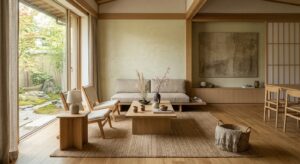
A step-by-step approach can make the process easier and prevent unnecessary purchases.
Start With the Room’s Layout
Measure the space first. Consider windows, doors, walkways, outlets, and existing architectural features. Place the main seating before adding smaller pieces and make sure people can move comfortably around the room.
Select Your Main Color Palette
Choose your foundation colors before shopping. Warm white, beige, taupe, soft grey, natural wood, and muted earthy tones provide plenty of options. Then choose one or two restrained accent colors if needed.
Choose the Main Furniture
Start with essential pieces: sofa, coffee table, storage, and any additional seating. Look for simple silhouettes and proportions that suit the size of the room.
Add Natural Materials and Textures
Once the major furniture is in place, add wood, linen, wool, cotton, ceramics, stone, rattan, or bamboo where appropriate. Do not feel obligated to use every material. Choose combinations that create enough variety.
Introduce Lighting
Consider natural light first, then add artificial sources for evening use. A combination of ceiling, floor, and table lighting can create different levels of illumination.
Finish With Minimal Decor
Decorate last. Add plants, artwork, ceramics, books, cushions, or other objects only after the practical elements are complete. This makes it easier to identify what is genuinely missing.
Read more: 25 Modern Kitchen Tiles Design Ideas for a Beautiful Kitchen
Common Japandi Living Room Mistakes to Avoid
Even when the individual pieces are appropriate, the overall room can lose its balance if the principles are applied too rigidly.
Making the Room Too Empty
Minimalism is not the same as emptiness. A living room still needs seating, storage, lighting, and objects that make it useful and personal.
Using Too Much Beige
A room made entirely from similar beige shades can lack contrast. Add variation through wood tones, texture, muted colors, or small charcoal and black accents.
Choosing Furniture That Is All the Same Style
The appeal of Japandi style comes partly from the combination of Japanese and Scandinavian influences. You do not need every piece to come from one matching furniture collection. Mix simple pieces that share compatible proportions, materials, and colors.
Adding Too Many Decorative Items
Too many accessories can undermine the uncluttered quality of the room. Keep some surfaces intentionally open. Choose a few objects with genuine visual or personal value.
Forgetting Comfort and Functionality
A room should work for real life. Make sure seating is comfortable, storage is adequate, lighting suits the activities in the room, and furniture allows easy movement.
Using Harsh or Cold Lighting
A single bright overhead light can make a warm neutral room feel less inviting. Consider several light sources and appropriate color temperatures instead.
How to Maintain a Japandi Style Living Room
Maintaining the look does not require constantly buying new decorations. It is primarily about keeping the room organized and intentional.
Keep Surfaces Clutter-Free
Return everyday objects to their proper places. Clear coffee tables and organized shelves help preserve the visual simplicity of the space.
Organize Everyday Items
Use drawers, cabinets, baskets, and other storage solutions for remote controls, cables, books, toys, and other items that tend to accumulate.
Care for Natural Materials
Wood, linen, wool, ceramics, and other natural materials should be cleaned and maintained according to their specific care requirements. Avoid using one cleaning product on every material simply because it is convenient.
Regularly Reassess What You Actually Need
Living rooms naturally collect belongings over time. Every few months, review the space and consider whether each item still serves a purpose or has personal value.
This simple habit helps maintain the uncluttered character associated with Japandi style without requiring a complete redesign.
Final Thoughts
Creating a beautiful living room does not require following every design rule or replacing all your furniture. Japandi style works best when its principles are adapted to your lifestyle.
Start with a practical layout, comfortable furniture, warm neutral colors, and natural materials such as wood, linen, wool, ceramics, and stone. Add greenery, soft lighting, and a few meaningful decorative pieces without creating clutter.
The goal is not to have an empty room, but to give everything a clear purpose. By balancing simplicity, functionality, natural textures, and comfort, Japandi style can create a living room that feels calm, warm, and practical for everyday life.