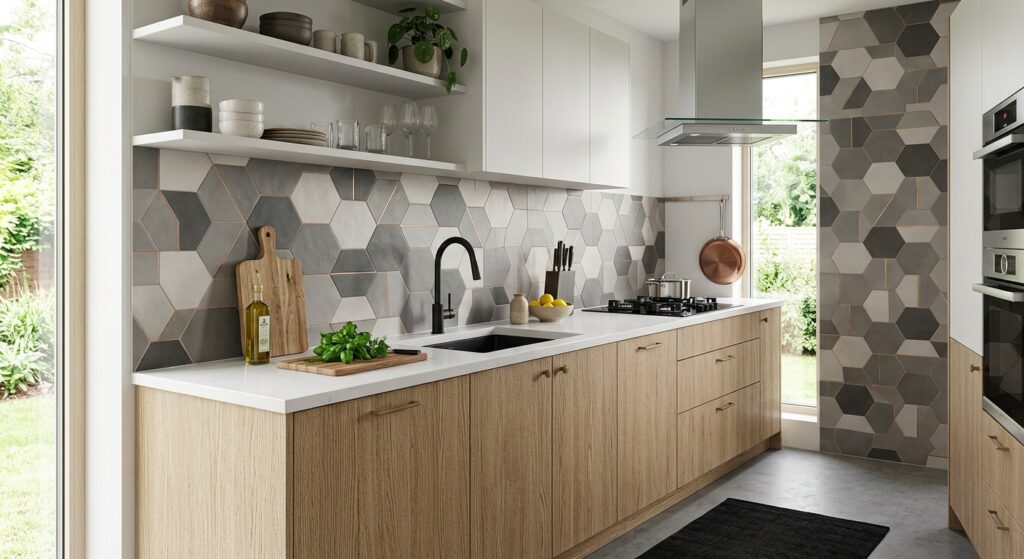

A kitchen can look completely different with the right tile. From simple rectangular backsplash tiles to warm stone-look surfaces, tile allows you to add color, texture, pattern, and character without changing the entire kitchen.
In 2026, Modern kitchen tiles design is moving beyond the traditional combination of cool white and gray. Warmer neutrals, earthy colors, green and blue tones, handmade-looking finishes, elongated subway shapes, and dimensional surfaces are receiving attention in current tile collections.
At the same time, practical considerations remain important. A beautiful tile still needs to be suitable for its location, reasonably easy to maintain, and correctly installed.
What Makes a Kitchen Tile Design Modern?
Modern Modern kitchen tiles design is not limited to one color, shape, or material. Instead, it generally focuses on clean visual appearance, thoughtful proportions, suitable materials, and a balanced combination of finishes.
Clean Lines and Simple Forms
Rectangular tiles, large-format surfaces, simple grids, and carefully planned layouts can create a clean appearance. Rectangular backsplash tiles are particularly common: the 2026 U.S. Houzz Kitchen Trends Study found that 68% of homeowners who chose tile for a new or upgraded backsplash selected rectangular tiles.
For Modern kitchen tiles design, simple forms can provide a timeless foundation while allowing cabinets, lighting, and countertops to become part of the overall design.
Contemporary Colors and Finishes
Modern kitchens can use much more than white and gray. Warm beige, cream, green, blue, terracotta, brown, and other earthy shades can work well when coordinated with cabinets and countertops.
Current 2026 tile collections show stronger interest in warm and nature-inspired colors, while glossy, handmade-looking, and dimensional surfaces are also appearing prominently.
Using Scale and Pattern Effectively
Tile size and layout can change the visual character of a kitchen. A simple horizontal arrangement can feel calm and organized, while herringbone, vertical stacking, mosaics, or geometric arrangements can create more visual interest.
The key to successful Modern kitchen tiles is not to use every pattern at once. Choose one main visual feature and let the surrounding finishes support it.
Balancing Style With Practicality
The best Modern kitchen tiles design should work with the way you use your kitchen. Floors need products appropriate for floor applications and the conditions they will experience, while backsplash tiles need to be suitable for wall installation and regular exposure to cooking splashes.
Cleaning requirements also vary by tile surface and material, so always follow the manufacturer’s care recommendations.
25 Modern Kitchen Tiles Design Ideas
1. White Subway Tile
White subway tile remains a dependable choice for a modern kitchen. Its simple rectangular shape works with contemporary, transitional, and minimalist interiors.
For a more updated Modern kitchen tiles, consider a longer rectangular tile or a different layout instead of the classic running-bond arrangement.
Design tip: Use grout that complements the cabinets and countertop rather than automatically choosing bright white.
2. Large-Format Porcelain Tile
Large-format porcelain can create a more continuous appearance because there are fewer grout joints across a given surface.
Porcelain is defined by TCNA standards as tile with water absorption of 0.5% or less, measured using ASTM C373. For large tiles, professional installation and appropriate substrate preparation are especially important.
This approach can give Modern kitchen tiles design a clean appearance, particularly in kitchens with simple cabinetry and minimal decoration.
3. Marble-Look Porcelain Tile
If you like the appearance of marble but prefer a manufactured tile surface, marble-look porcelain can be an attractive alternative.
It can reproduce veining and stone-inspired patterns while providing the characteristics of porcelain. However, the exact appearance, maintenance requirements, and suitability depend on the specific product.
For an elegant Modern kitchen tiles design, marble-look porcelain can provide visual movement without requiring actual marble throughout the kitchen.
4. Warm Beige and Cream Tile
Warm neutral tiles can make a kitchen feel comfortable without looking dated. Cream, sand, taupe, and beige shades can work particularly well with natural wood cabinets.
Warm neutrals are also consistent with the broader shift toward warmer tile palettes reported in 2026.
This makes warm neutral surfaces a useful option for Modern kitchen tiles design when you want a softer alternative to cool gray.
5. Contemporary Grey Tile
Gray tile can still work beautifully in a modern kitchen. Choose a shade that coordinates with the rest of the room rather than assuming all gray tiles will produce the same result.
Warm gray can work with wood and cream, while cooler gray can complement certain white, black, or metallic finishes.
A carefully selected gray can give Modern kitchen tiles design a calm and understated appearance.
6. Matte Black Tile
Black tile can create a dramatic backsplash or accent wall. It works particularly well when balanced with lighter cabinets, countertops, or natural wood.
Because darker surfaces can show dust, water marks, and cooking residue more visibly, consider maintenance before using black tile across a large area.
In the right setting, black tile can make Modern kitchen tiles design feel bold without requiring a complicated pattern.
7. Glossy Ceramic Backsplash Tile
Glossy ceramic tile can reflect available light and create a brighter appearance on a kitchen backsplash.
Ceramic remains the most commonly selected tile type among homeowners surveyed in the 2026 Houzz Kitchen Trends Study, at 49% of tile backsplash choices, followed by porcelain at 23%.
A glossy ceramic backsplash can therefore be a practical and attractive direction for Modern kitchen tiles design, particularly on walls.
8. Herringbone Tile Pattern
Herringbone creates movement without requiring a highly decorative tile. It can make a simple rectangular tile look more distinctive.
In the 2026 U.S. Houzz kitchen study, herringbone was selected by 7% of homeowners choosing a tile backsplash.
Design tip: Keep the tile color relatively simple if you want the layout itself to be the main feature.
9. Vertical Tile Layout
Installing rectangular tiles vertically can create a different visual rhythm and draw the eye upward.
For Modern kitchen tiles, this layout can be useful when you want the backsplash to feel taller or more architectural, although the final effect depends on the kitchen’s proportions.
10. Hexagon Tile
Hexagonal tiles provide geometric interest without requiring an elaborate pattern.
They can be used as a backsplash feature or in selected areas where you want more visual detail. If using a bold hexagon pattern, keep nearby finishes relatively restrained.
Hexagonal shapes can give Modern kitchen tiles design a contemporary geometric character without relying on highly ornate decoration.
11. Geometric Pattern Tile
Geometric tiles can become the focal point of a kitchen. Shapes such as diamonds, lines, arches, and repeating patterns can add personality.
Use them selectively so that the tile does not compete with highly patterned countertops, cabinets, lighting, and accessories.
This type of Modern kitchen tiles design works best when the surrounding elements remain visually balanced.
12. Terrazzo-Look Tile
Terrazzo-look tile can introduce multiple subtle colors into the kitchen while maintaining a contemporary appearance.
It can be especially useful when you want to connect several colors from the cabinets, walls, countertop, or flooring.
For Modern kitchen tiles design, terrazzo-look surfaces can add visual variation without requiring several different tile colors.
13. Natural Stone-Look Tile
Stone-look porcelain and ceramic tiles can provide the visual character of stone without being actual natural stone.
This distinction matters because natural stone has different maintenance requirements. Daltile notes that natural stone requires a different maintenance program from manufactured ceramic tile.
Stone-inspired surfaces can therefore be a flexible choice for Modern kitchen tiles design, especially when you want a natural appearance with manufactured tile.
14. Wood-Look Porcelain Tile
Wood-look porcelain can introduce a warmer visual element into a kitchen while retaining a tile surface. It can coordinate especially well with modern kitchens featuring wood cabinetry, neutral walls, and simple countertops.
This combination can make Modern kitchen tiles design feel warmer while maintaining a contemporary visual direction.
15. Green Tile
Green is an excellent option when you want a kitchen to feel connected to nature. Soft sage, muted olive, deeper green, and other shades can work with cream, wood, brass, black, or neutral finishes.
Nature-inspired greens remain part of the tile color direction highlighted in 2026 industry coverage. A green backsplash can give Modern kitchen tiles design a fresh accent without requiring changes to the entire kitchen.
16. Blue Accent Tile
Blue can add personality without requiring a complete kitchen redesign. A blue backsplash can become the main accent while white, cream, wood, or neutral cabinetry keeps the overall room balanced.
For homeowners seeking colorful Modern kitchen tiles design, blue provides several possibilities, from soft muted shades to deeper accent tones.
17. Textured Wall Tile
Texture can make a neutral kitchen more interesting without introducing a strong color. Three-dimensional and dimensional tile surfaces are appearing in current 2026 collections, including combinations of flat and raised surfaces.
Because textured surfaces can collect residue more easily than very smooth surfaces, consider cleaning access before selecting them behind cooking areas.
18. Handmade-Look Ceramic Tile
Handmade-look tiles can provide variation in color and surface that gives a backsplash a less uniform appearance.
They can work particularly well with warm wood, natural stone, cream cabinets, and other organic-looking materials. Current 2026 tile collections include more handmade-looking subway and colorful ceramic options.
This makes handmade-look surfaces an interesting direction for Modern kitchen tiles design when you want a less uniform finish.
19. Mosaic Accent Tile
Mosaic tiles can be used to highlight a smaller area rather than covering every wall.
For example, a mosaic can define the cooking zone while simpler tile surrounds it. This creates a focal point without overwhelming the entire kitchen.
A carefully placed mosaic can add detail to Modern kitchen tiles design while keeping the rest of the room relatively simple.
20. Checkerboard Tile Pattern
Checkerboard tile can create a strong graphic appearance using two contrasting colors.
For a more contemporary interpretation, consider less traditional color combinations such as cream and warm brown rather than automatically using stark black and white.
A controlled checkerboard pattern can give Modern kitchen tiles design a distinctive visual identity.
21. Full-Height Backsplash
A backsplash can extend from the countertop toward the ceiling or another architectural stopping point.
This can create a visually continuous wall, but it is not necessary for every kitchen. In the 2026 Houzz study, 10% of renovating homeowners took the backsplash all the way to the ceiling, while most stopped at cabinets or the range hood.
A full-height backsplash can make Modern kitchen tiles design feel more integrated with the architecture of the room.
22. Two-Tone Tile Combination
Combining two tile colors can create a custom appearance. For example, a neutral main tile can be paired with a darker accent, or a warm cream tile can be combined with a muted green.
Keep the relationship between the colors intentional so the kitchen does not look visually fragmented.
Two coordinated shades can make Modern kitchen tiles design more personalized without introducing too many competing patterns.
23. Contrasting Grout With Neutral Tile
Grout is part of the overall design rather than simply a technical necessity.
A contrasting grout color can emphasize the shape and layout of individual tiles, while a similar grout color can create a quieter, more continuous appearance.
For Modern kitchen tiles design, grout selection should be considered alongside the tile rather than as an afterthought.
24. Statement Tile Behind the Cooking Area
A statement tile can be limited to the wall behind the range or cooktop.
This approach gives you a focal point while reducing the amount of highly decorative tile that needs to be purchased and maintained.
Make sure the selected product is suitable for the intended wall application and follow installation requirements for the specific product.
25. Coordinated Floor and Backsplash Tile
You do not necessarily need identical floor and backsplash tiles. Instead, choose surfaces that share a color, texture, or visual characteristic.
For example, a stone-look floor can coordinate with a lighter stone-look backsplash without being exactly the same tile.
This creates consistency while allowing each surface to serve a different practical and visual purpose, which is important in well-planned Modern kitchen tiles design.
How to Choose the Right Modern Kitchen Tiles
Choosing the right Modern kitchen tiles design involves more than selecting the tile you like most in a showroom.
Choose Tiles According to Where They Will Be Installed
A floor tile and backsplash tile have different requirements. Always confirm that the product is rated for the intended application. For floors, conditions such as water, grease, drainage, and traffic should be considered because they can affect slip conditions.
Choose the Right Tile Material
Ceramic, porcelain, glass, natural stone, and other tile materials have different characteristics. Porcelain is particularly low-absorption, while natural stone generally requires a different maintenance approach.
Consider the Tile Finish
Glossy, matte, textured, polished, and satin finishes can create very different appearances. A polished surface may need more care in certain situations, and textured or matte products may require cleaning methods specific to their surface.
Select the Appropriate Tile Size
Large-format tiles can reduce the number of visible grout joints, while smaller tiles provide more opportunities for patterns. Large tiles also require careful installation and appropriate substrate preparation.
Think About Grout Color and Joint Size
Grout affects the final appearance significantly. Before installation, look at actual tile and grout samples together. A small sample can look very different once repeated across an entire wall or floor.
Match the Tiles With Cabinets and Countertops
Think about the entire kitchen palette. If the countertop already has a strong veining or pattern, a quieter tile may work better. If the cabinets and countertop are simple, the backsplash can provide more visual interest.
Consider Cleaning and Maintenance
Kitchen surfaces regularly encounter food, grease, moisture, and dust. Choose a tile and finish that fits the amount of maintenance you are willing to perform. Daltile recommends using cleaning products appropriate for the tile and grout and following manufacturer instructions.
Modern Kitchen Tiles Design for Different Areas
Best Tile Considerations for Kitchen Floors
For floors, prioritize application suitability, durability, cleaning, and slip-related performance rather than choosing a tile based only on appearance. A polished tile may look attractive, but floor conditions should always be considered before installation.
Best Tile Considerations for Kitchen Walls
Kitchen walls allow greater freedom with color, texture, shape, and finish. Ceramic and porcelain are both widely used, while glass and decorative tile can create specific visual effects. The 2026 Houzz study shows ceramic and porcelain leading tile backsplash choices.
Best Tile Considerations for Kitchen Backsplashes
Backsplashes are an excellent place to experiment with color and pattern because they can create a strong design statement without covering the entire kitchen. Rectangular tile remains particularly common in current U.S. kitchen renovations.
Modern Kitchen Tiles for Small Kitchens
Light and Neutral Tile Colors
Light colors can create a visually open feeling, especially when coordinated with cabinets and walls. However, the actual result depends on lighting, room proportions, and the overall color palette.
Large-Format Tiles
Large tiles can create fewer visible grout lines and a more continuous appearance. They can work in small kitchens, but installation conditions and tile dimensions need to be considered carefully.
Simple Patterns
Simple layouts can prevent a small kitchen from feeling visually crowded. If you choose a strong pattern, consider limiting it to one focal area.
Glossy Tiles on Suitable Wall Areas
Glossy wall tiles can reflect available light and create a bright surface. For floors, however, do not select a glossy finish simply because it looks brighter. Follow the product’s intended-use and performance specifications.
Read more: Techlokesh org India: Everything You Need to Know
How to Match Modern Kitchen Tiles Design With Your Interior
Tiles With White Cabinets
White cabinets provide a flexible background for warm neutrals, wood-look tile, green, blue, gray, black, and patterned backsplashes.
Tiles With Wood Cabinets
Warm beige, cream, green, terracotta-inspired, and stone-look tiles can complement wood cabinetry particularly well.
Tiles With Dark Cabinets
Lighter tile can provide contrast with dark cabinets, while a similarly dark backsplash can create a more dramatic appearance.
Tiles With Stone or Marble Countertops
If the countertop already contains prominent veining, consider a simpler backsplash so that the surfaces complement rather than compete with each other.
Common Mistakes to Avoid When Choosing Kitchen Tiles
Choosing Style Without Considering Function
A tile should look good, but it also needs to be suitable for the location and conditions where it will be installed.
Using Too Many Competing Patterns
Combining several bold patterns can make the kitchen feel cluttered. Choose one main statement and use quieter materials around it.
Choosing an Unsuitable Floor Finish
Do not choose a floor tile based solely on whether it is glossy or matte. Consider the manufacturer’s application guidance and the conditions of the kitchen.
Forgetting About Maintenance
Some surfaces require more frequent or specialized cleaning than others. For example, polished porcelain can require additional care to minimize fine scratches and staining, according to Daltile.
Not Planning the Layout Before Installation
Tile layout should be planned before installation begins. This helps avoid awkward cuts and ensures that important design features appear where you expect them.
How to Maintain Modern Kitchen Tiles Design
Regularly Clean Tile Surfaces: Remove loose dirt before mopping and use cleaning products appropriate for the tile and grout.
Keep Grout Clean: Grout can collect dirt and discolor over time, so regular cleaning is important.
Remove Grease and Food Splashes: Kitchen spills are easier to deal with when cleaned promptly rather than allowed to remain on the surface.
Use Cleaning Products Appropriate for the Tile Material: Do not assume that every household cleaner is suitable for every tile.
Always follow the tile manufacturer’s recommendations. Natural stone, ceramic, porcelain, glass, and specialty finishes can have different care requirements.
Final Thoughts
The best Modern kitchen tiles design is not necessarily the most expensive, colorful, or fashionable option. It is the design that balances appearance, function, installation requirements, cleaning, and the overall style of the kitchen.
In 2026, there are plenty of directions to explore, from warm neutral and nature-inspired colors to elongated subway tiles, handmade-looking ceramics, dimensional surfaces, geometric patterns, and classic rectangular layouts.
Whether you prefer a clean white backsplash, a warm stone-inspired floor, a colorful green accent wall, or a carefully planned geometric pattern, start with the practical requirements of the space and then build the design around them.
FAQs About Modern Kitchen Tiles Design
Which tiles are suitable for a modern kitchen?
Ceramic and porcelain tiles are versatile choices for modern kitchens. The right option depends on whether the tile is used for the floor, wall, or backsplash.
Is porcelain a good choice for kitchen floors?
Yes, porcelain can be a strong choice for kitchen floors when correctly rated and installed. Porcelain tile has a water absorption rate of 0.5% or less under the relevant standard.
What type of tile works well for a kitchen backsplash?
Ceramic and porcelain are popular backsplash options, while glass and mosaic tiles offer decorative alternatives. Rectangular tiles are particularly common in current U.S. kitchen renovations.
Are large-format tiles suitable for small kitchens?
Yes, large-format tiles can work in small kitchens and may create fewer visible grout joints. However, room layout, tile size, and installation requirements should be considered.
What tile colors work well in a modern kitchen?
White, cream, beige, gray, green, blue, and earthy shades can all suit modern kitchens. Warm and nature-inspired colors are receiving more attention in 2026 tile collections.
Should kitchen floor tiles be matte or glossy?
Either finish can work depending on the tile and kitchen conditions. For floors, choose based on suitable performance, intended use, and manufacturer guidance.