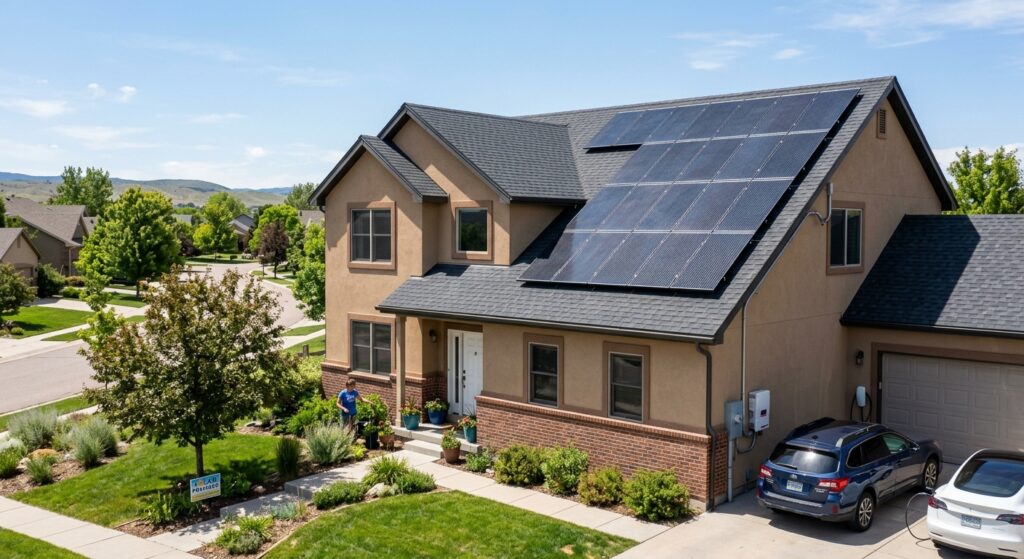

If you are thinking about installing solar panels for home, it is worth understanding how the technology works, what your property can support, what equipment you need, and what questions to ask an installer before signing a contract. Solar power can reduce the amount of electricity a household buys from the utility, while also allowing homeowners to generate electricity from sunlight.
However, the right system depends on factors such as household electricity use, roof condition, sunlight, shading, local rules, equipment, and the way electricity is priced and credited in your area.
What Are Solar Panels for Home?
Solar panels are photovoltaic, or PV, modules that convert sunlight into electricity. Individual solar cells contain semiconductor materials that absorb sunlight and generate electrical current. Multiple cells are connected to create a module, while multiple modules can be combined into a larger solar array.
For a home, solar panels are normally only one part of a complete PV system. A residential system can also include an inverter, mounting equipment, electrical equipment, monitoring technology, and, when selected, a battery-storage system.
How Do Solar Panels Work?
When sunlight reaches a photovoltaic cell, the semiconductor absorbs energy from the light. This energy causes electrons to move, creating an electrical current. The electricity produced by the panels is direct current, or DC. An inverter converts that DC electricity into alternating current, or AC, which is the form of electricity normally used by household appliances and the electrical grid.
What Is a Home Solar Energy System?
A home solar energy system is a collection of components designed to generate and manage electricity from sunlight. The panels generate DC electricity, the inverter converts it into AC electricity, and the electrical system distributes the power for household use or connection with the utility grid.
Why Consider Solar Panels for Home?
Solar panels can be useful for homeowners who want to generate some of their own electricity instead of purchasing all of it from the utility. The actual financial and practical benefits depend on the home’s electricity consumption, system design, local electricity rules, available sunlight, and the cost of the system.
Lower Electricity Bills
When a solar system produces electricity that your home uses, you may need to purchase less electricity from the utility. However, solar does not automatically eliminate every electricity charge. Utility arrangements differ, and households can still have fixed charges or purchase electricity when their solar system is not producing enough.
Use Renewable Energy
Solar PV generates electricity from sunlight rather than burning fuel at the point of generation. DOE describes photovoltaic technology as a way of converting sunlight directly into electrical energy through semiconductor materials.
Increase Energy Independence
A properly designed solar system can allow a household to generate part of its own electricity. The degree of energy independence depends on the size and performance of the system and the home’s electricity demand.
What Types of Solar Panels Are Available for Homes?
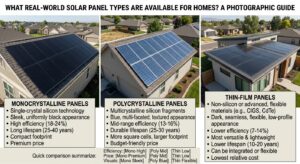
Solar panels use different photovoltaic technologies. The major categories homeowners may encounter include crystalline-silicon panels and thin-film technologies. Silicon remains the dominant material for commercial solar cells, while thin-film technologies use very thin layers of photovoltaic material deposited on a supporting surface.
Monocrystalline Solar Panels
Monocrystalline solar cells are made from a single crystal structure. DOE notes that crystalline-silicon technology combines characteristics such as efficiency, cost, and long operating life, and monocrystalline cells generally have higher efficiency than polycrystalline cells because of their crystal structure.
Polycrystalline Solar Panels
Polycrystalline solar cells contain multiple crystal structures. DOE explains that polycrystalline cells have historically been less expensive to manufacture than monocrystalline cells, although monocrystalline cells generally offer higher efficiency.
Thin-Film Solar Panels
Thin-film photovoltaic cells are made by depositing one or more thin layers of photovoltaic material onto a supporting material such as glass, plastic, or metal. Examples include cadmium telluride and copper indium gallium diselenide technologies.
How Many Solar Panels Does a Home Need?
There is no single number of panels that works for every home. A system should be sized according to the household’s electricity needs, available solar resource, roof characteristics, shading, and the equipment selected.
Household Electricity Usage
Your electricity bills are one of the most useful starting points when determining system size. Reviewing electricity use over a full year can reveal both annual consumption and seasonal changes.
Roof Size and Available Space
Roof space places a practical limit on how many panels can be installed. The usable area may also be affected by roof shape, vents, chimneys, roof edges, and other structures.
Sunlight and Shading
Solar production depends strongly on how much sunlight reaches the panels. Trees, buildings, roof structures, and other obstructions can cast shadows and reduce solar generation. Geographic location, season, time of day, and weather also influence the available solar resource.
How Much Do Solar Panels for Home Cost?
The cost of solar panels for home varies considerably. There is no single worldwide installation price because equipment, labor, roof characteristics, permits, financing, local market conditions, and system design can all affect the final amount.
Solar Panel and Equipment Costs
The panels themselves are only one part of a residential solar system. A complete installation can include panels, inverters, mounting structures, electrical equipment, monitoring components, and optional battery storage.
Installation and Labor Costs
Installation costs can include labor, electrical work, mounting, permitting, inspection, and other project-related expenses. DOE notes that permitting and other administrative elements are part of the broader “soft costs” associated with residential solar.
Factors That Affect the Total Cost
The total cost may be influenced by system size, equipment selection, roof complexity, electrical work, installation requirements, permits, storage, financing, and local conditions.
What Should You Check Before Installing Solar Panels?
Before installing solar panels for home, take a close look at the property itself. A solar installer should evaluate the roof, sunlight exposure, shading, electricity needs, and other site-specific factors.
Roof Condition and Age
A solar installation can remain on a home for many years, so installing panels on a roof that already needs major work may create unnecessary complications.
Roof Direction and Sun Exposure
Roof orientation affects solar exposure. DOE notes that solar panels generally perform best on unshaded south-facing roofs in the Northern Hemisphere, although other orientations can also be suitable depending on the roof and location.
Shading From Trees and Buildings
Shade can reduce the sunlight reaching PV modules and therefore affect electricity production. Trees, nearby buildings, chimneys, roof peaks, and other obstructions can create shadows at different times of day and throughout the year.
Local Permits and Requirements
Solar installation requirements vary by location. Local authorities may require permits and inspections before a rooftop solar system can operate on the grid. After installation, an inspection may be required before the utility connects the system.
Because rules differ between jurisdictions, homeowners should check the requirements that apply to their specific property rather than relying on information from another location.
How Does Solar Panel Installation Work?
The exact process varies by installer and location, but residential solar projects generally involve site assessment, system design, permitting, installation, inspection, and grid interconnection where applicable.
Site Assessment
The installer first evaluates whether the property is suitable for solar. This can include reviewing the roof, shading, orientation, electrical requirements, and household electricity use.
Solar System Design
After evaluating the property and electricity needs, the installer can design the system. The design determines factors such as panel placement, system capacity, inverter configuration, mounting method, and electrical connections.
Permits and Approvals
Depending on the jurisdiction, permits and approvals may be required before installation or grid connection. Local governments can have different rules, fees, and inspection procedures.
Panel and Equipment Installation
Once the required approvals are in place, the installation team mounts the solar array and installs the necessary electrical equipment. Mounting structures need to provide a stable and durable support for the panels and withstand outdoor conditions.
The inverter is also installed because the electricity produced by PV modules must be converted from DC to AC for normal household use.
Inspection and System Activation
After installation, an inspection may be required to verify that the system complies with applicable safety requirements. Where grid connection is involved, the utility generally completes its interconnection process before the system begins operating on the grid.
What Equipment Is Needed for Solar Panels for Home?
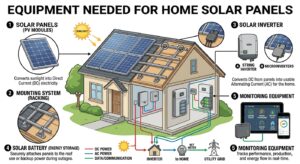
A residential PV system is more than a collection of panels. Different components work together to generate, convert, mount, monitor, and potentially store electricity.
Solar Panels
Solar panels contain photovoltaic cells that convert sunlight into DC electricity. Multiple panels are connected to create an array with the capacity required by the system design.
Solar Inverter
An inverter converts the DC electricity produced by the solar panels into AC electricity used by household appliances and compatible with the electrical grid. Residential systems can use a central inverter or microinverters attached to individual modules.
Mounting System
The mounting structure supports the panels and holds them in the appropriate position. A properly designed mounting system must be durable and able to withstand outdoor conditions such as wind and rain.
Solar Battery
A battery stores electricity for later use. This can be useful when solar production is unavailable, such as at night, or when a properly configured solar-plus-storage system is being used for backup power. A battery is not automatically required for every residential solar installation.
Monitoring Equipment
Monitoring technology can help homeowners and installers track system performance and identify changes in electricity production. The exact monitoring features depend on the equipment and system design.
Do You Need a Solar Battery for Your Home?
Not every home needs a battery. Whether storage makes sense depends on your electricity usage, utility arrangements, desired backup capability, solar production, and the cost of adding storage.
How Solar Batteries Work
A solar battery stores electrical energy generated by the PV system so that it can be used later. This allows some solar-generated electricity to be shifted from the time it is produced to a later period when the panels are generating less or no electricity.
Benefits of Battery Storage
Battery storage can help a household use stored solar energy after sunset and can support backup power in a properly configured solar-plus-storage system.
When a Battery May Be Useful
A battery may be worth considering when a homeowner wants to use more solar energy after sunset, reduce dependence on grid electricity during certain periods, or have backup capability during outages.
How Much Electricity Can Solar Panels for Home Generate?
The amount of electricity generated by solar panels for home depends on more than the number of panels. Solar resource, panel characteristics, system orientation, shading, weather, temperature, and other system factors affect output.
Factors That Affect Energy Production
Important factors include the amount and intensity of sunlight, panel orientation and tilt, shading, temperature, system efficiency, and the location of the home.
Impact of Weather and Seasons
Solar production changes throughout the year. The amount of solar radiation reaching a location varies with season, time of day, geography, landscape, and weather. Clouds can reduce direct sunlight and change the amount of solar energy reaching the panels.
Understanding Solar System Capacity
System capacity describes the electrical capacity of the installed PV equipment, but capacity alone does not tell you exactly how much electricity the system will generate over a year.
How to Maintain Solar Panels for Home?
Solar panels are designed for outdoor operation over many years, but the complete system still deserves periodic attention. Maintenance requirements depend on the equipment, environment, and installer recommendations.
Cleaning Solar Panels
Dust, dirt, leaves, and other debris can affect the amount of sunlight reaching a panel. The appropriate cleaning approach depends on the installation and local conditions.
Monitoring System Performance
Monitoring electricity production can help identify unusual changes in system performance. If production drops unexpectedly without an obvious reason, the homeowner can contact the installer or a qualified solar professional.
Inspecting the Solar Equipment
The panels, mounting system, inverter, wiring, and other equipment should remain in good condition. The appropriate inspection schedule depends on the system and manufacturer recommendations.
When to Contact a Professional
Contact a qualified professional when you notice equipment damage, persistent performance problems, electrical issues, roof leaks, or other conditions that require technical work. Do not attempt electrical repairs on a solar system simply because the equipment appears straightforward.
Read more: Webparsab com: How It Works, Features & More
How Long Do Solar Panels for Home Last?
Solar panels are designed for long-term operation. DOE states that silicon modules are expected to last 25 years or more while still producing more than 80% of their original power after that period.
Solar Panel Lifespan
A panel’s useful life does not necessarily end after a specific number of years. Instead, its output generally declines gradually over time.
Inverter and Battery Lifespan
Different components can have different service lives. DOE notes that inverters may need replacement during the lifetime of a PV array, while batteries have their own operating and warranty characteristics.
Understanding Solar Warranties
Solar proposals can include different warranties covering equipment and installation workmanship. The FTC recommends checking what warranties apply to panels, inverters, installation work, repairs, and other parts of the agreement.
What Are the Pros and Cons of Solar Panels for Home?
| Advantages | Potential Disadvantages |
| Can generate electricity from sunlight | Initial installation can require a significant investment |
| May reduce the amount of electricity purchased from the utility | Savings vary based on electricity prices and system performance |
| Uses a renewable source of energy | Roof condition and available space can limit installation options |
| Can increase household energy independence | Shading and limited sunlight can reduce energy production |
| Battery storage can provide additional energy-use flexibility | Batteries can add to the overall system cost |
| May provide long-term value when properly designed | Local permits, utility rules, and financing terms can affect the decision |
How to Choose the Right Solar Panels for Home?
Choosing solar panels for home should involve more than selecting the panel with the highest advertised efficiency. The complete system, installer, warranty, expected production, and total cost all matter.
Compare Solar Panel Efficiency
Panel efficiency indicates how effectively a panel converts available solar energy into electricity. Higher efficiency can be particularly useful when roof space is limited, but efficiency should be considered alongside price, warranty, expected production, and available space.
Check Product and Installation Warranties
Read the warranties carefully. Determine what is covered, how long coverage lasts, and whether equipment and installation workmanship have separate terms. The FTC specifically recommends comparing warranty coverage when evaluating solar bids.
Compare Solar Installers
Do not select an installer solely because the initial quote is the lowest. DOE recommends researching qualified installers, checking credentials, comparing multiple proposals, and understanding the terms of the contract.
Review System Size and Specifications
Every proposal should clearly explain the system size, equipment, expected energy production, installation costs, warranties, and any additional fees.
What Mistakes Should You Avoid Before Installing Solar Panels?
Installing solar is a long-term home improvement, so rushing into a contract can create problems. Researching the property, comparing installers, and reading the agreement carefully can help reduce avoidable mistakes.
Choosing the Wrong System Size
A system should be designed around the home’s electricity consumption and solar potential. Choosing a system simply because it has a large number of panels can lead to a mismatch between production, roof space, and household needs.
Ignoring Roof Condition
Installing solar on a roof that needs major repairs can complicate future work. Ask whether the roof should be repaired or replaced before the panels are installed.
Focusing Only on the Lowest Price
The cheapest quote may not provide the best overall value. Compare equipment, expected production, installation quality, warranties, financing terms, and the responsibilities of both the homeowner and installer.
Overlooking Warranties and Installation Terms
Never sign a solar contract without understanding what you are paying, how long the agreement lasts, who handles maintenance, what happens if the system underperforms, and what happens if you sell the home.
Are Solar Panels for Home Worth It?
Whether solar panels for home are worth the investment depends on the individual property and financial situation. There is no universal answer because electricity prices, installation costs, solar production, incentives, financing, and utility policies vary by location.
Factors That Affect Potential Savings
Potential savings depend on how much electricity the system produces, how much of that electricity the household uses, the price of electricity from the utility, applicable charges, financing costs, and how the utility treats excess electricity sent to the grid.
When Solar Panels May Make Sense
Solar may be worth considering when a home has suitable roof space, sufficient sunlight, a sound roof, and electricity needs that can be meaningfully served by the proposed system.
What to Consider Before Making a Final Decision
Before purchasing solar panels for home, compare several detailed proposals, check the roof, review electricity usage, investigate local requirements, understand financing, and read every warranty and contract term.
Final Thoughts
Choosing solar panels for home is a decision that deserves more research than simply comparing panel prices. A successful project starts with understanding your electricity consumption, checking the condition and suitability of your roof, evaluating sunlight and shading, and learning how local permitting and utility requirements work.
Before signing an agreement, compare multiple qualified installers, request detailed written proposals, examine warranties, and make sure you understand every payment and contract term.
FAQs About Solar Panels for Home
How many solar panels does a home need?
There is no universal number. The required number depends on electricity consumption, solar resource, roof space, shading, panel characteristics, and the desired system size.
How much do solar panels for home cost?
The cost varies according to system size, equipment, installation requirements, roof characteristics, permitting, storage, financing, and local market conditions. The best way to understand the price for a particular home is to compare detailed quotes from qualified installers.
Can solar panels work on cloudy days?
Yes, solar panels can still produce electricity when some sunlight reaches them, but output can be lower when sunlight is reduced. DOE explains that clouds and atmospheric conditions affect the amount of solar radiation reaching the Earth’s surface.
Do solar panels work at night?
Photovoltaic panels need sunlight to generate electricity, so they do not generate solar electricity at night. A battery can store electricity generated earlier so that it can be used later.
How long does solar panel installation take?
The physical installation can sometimes take only a few days, but the complete project can take longer because permitting, inspections, and grid interconnection may require additional time.
Do solar panels require regular maintenance?
Solar panels are designed for long-term outdoor operation, but homeowners should monitor system performance and follow manufacturer and installer maintenance recommendations. System owners may be responsible for maintenance unless their agreement provides otherwise.