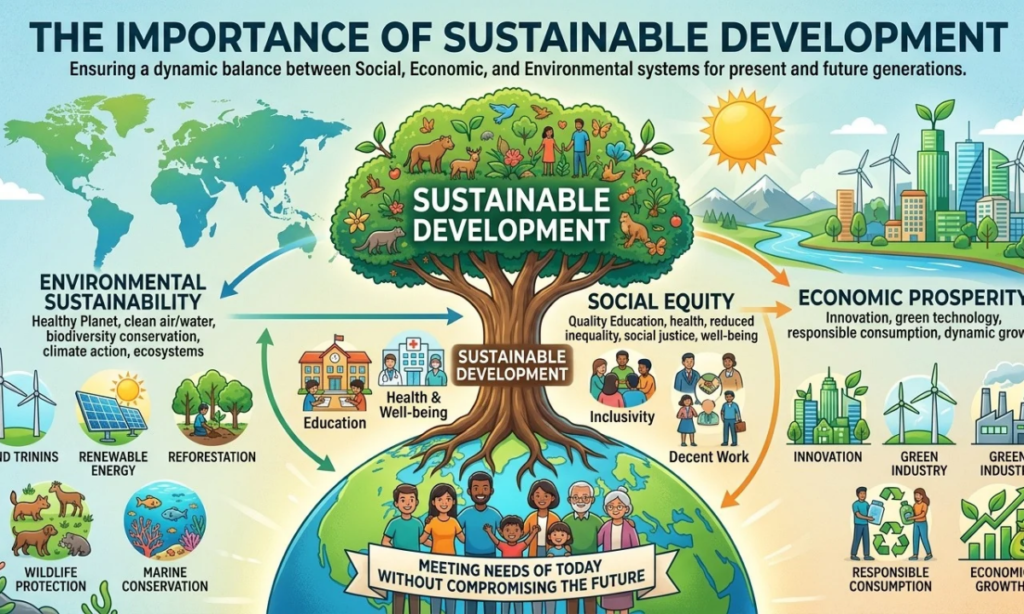

Sustainable development is essential for building a future where people can enjoy better living standards without damaging the environment or exhausting natural resources. Climate change, pollution, poverty, and resource shortages make responsible development increasingly important.
The Importance of Sustainable Development lies in balancing environmental protection, economic growth, and social well-being. It encourages individuals, businesses, and governments to make decisions that benefit current communities while protecting opportunities for future generations.
What Is Sustainable Development?
Sustainable development means meeting present needs without compromising the ability of future generations to meet their own needs. This widely recognized definition comes from the 1987 Brundtland Commission report, Our Common Future. In practice, it involves conserving natural resources, supporting economic opportunities, and improving people’s quality of life. Examples include using renewable energy, reducing waste, protecting forests, and improving access to education.
Key Principles of Sustainable Development
The main principles include responsible resource management, social inclusion, environmental protection, and long-term planning. These principles encourage decision-makers to consider the environmental and social consequences of their choices. Transparency, cooperation, and accountability are also important. By following these principles, communities can pursue development that supports lasting benefits rather than short-term gains alone.
Why Sustainable Development Matters Today
Population needs, industrial activity, and consumption place pressure on natural resources. Environmental damage can affect food production, water supplies, public health, and local economies. Sustainable development offers a framework for addressing these connected challenges. It encourages societies to improve living standards while reducing avoidable environmental harm.
Importance of Sustainable Development
Protecting the Environment and Natural Resources
Forests, rivers, oceans, soil, and wildlife support human life. Sustainable practices such as forest conservation, wastewater treatment, and responsible farming help protect these essential resources.
Promoting Economic Growth and Stability
Importance of Sustainable Development encourages efficient production, responsible investment, and innovation. Businesses can reduce waste, improve energy efficiency, and explore cleaner technologies while pursuing long-term financial stability.
Improving Social Equality and Quality of Life
Access to education, healthcare, safe housing, clean water, and decent employment contributes to stronger communities. Importance of Sustainable Development promotes fair opportunities and encourages governments to consider disadvantaged groups.
Preserving Resources for Future Generations
Responsible water use, soil conservation, and habitat protection help preserve resources for the future. The aim is to meet current needs without unnecessarily limiting future generations’ choices.
Major Benefits of Sustainable Development
Reducing Pollution and Climate Change
Cleaner energy, efficient transportation, and improved waste management can reduce pollution and greenhouse gas emissions. These actions support broader efforts to address climate change.
Conserving Water, Energy, and Biodiversity
Repairing water leaks, using efficient appliances, and protecting natural habitats can reduce resource waste. Conservation works best when individual actions are supported by effective infrastructure and policies.
Creating Green Jobs and Business Opportunities
Renewable energy, recycling, energy-efficient construction, and environmental services can create employment opportunities. Workers may need specialized training to benefit from these changing industries.
Improving Public Health and Community Well-Being
Cleaner air, safe drinking water, effective sanitation, and accessible green spaces can support healthier communities. Good urban planning can also make walking and public transportation more practical.
The Three Main Pillars of Sustainable Development
Environmental Sustainability
Environmental sustainability focuses on conserving ecosystems, reducing pollution, protecting biodiversity, and managing natural resources responsibly. These efforts help maintain the natural systems on which communities depend.
Economic Sustainability
Economic sustainability supports lasting economic activity through efficient resource use, responsible investment, and stable employment. Businesses can contribute by reducing operating waste and planning for long-term risks.
Social Sustainability
Social sustainability focuses on equality, human rights, education, healthcare, and decent working conditions. Importance of Sustainable Development encourages inclusive decision-making so development benefits a wider range of people.
Sustainable Development Goals (SDGs)
Understanding the United Nations Sustainable Development Goals
In 2015, United Nations Member States adopted the 2030 Agenda, which includes 17 Sustainable Development Goals. These goals provide a shared framework for addressing social, economic, and environmental challenges worldwide.
Key Goals for a Sustainable Future
Important goals include No Poverty (Goal 1), Quality Education (Goal 4), Clean Water and Sanitation (Goal 6), Affordable and Clean Energy (Goal 7), Sustainable Cities and Communities (Goal 11), and Climate Action (Goal 13). Goal 12 also promotes responsible consumption and production, while Goals 14 and 15 focus on marine and terrestrial ecosystems.
How the SDGs Support Global Development
The SDGs help countries establish priorities, develop policies, and measure progress. Their interconnected approach recognizes that improving education, reducing poverty, and protecting the environment often require coordinated action.
Role of Sustainable Development in Different Sectors
Sustainable Development in Agriculture
Farmers can support sustainability through soil conservation, efficient irrigation, crop rotation, and responsible pest management. Reducing food loss can also help preserve resources.
Sustainable Development in Education
Schools can teach environmental awareness, waste reduction, and responsible consumption. Sustainability education also helps students develop knowledge and skills relevant to future employment.
Sustainable Development in Business and Industry
Businesses can improve energy efficiency, reduce packaging, reuse materials, and monitor environmental impacts. Transparent reporting helps customers evaluate sustainability claims.
Sustainable Development in Cities and Communities
Sustainable cities need reliable public transportation, affordable housing, efficient buildings, accessible green spaces, and effective waste collection. Inclusive planning helps ensure these services meet community needs.
Sustainable Development in Energy and Transportation
Solar and wind energy can support lower-emission electricity generation. Public transportation, walking, cycling, and efficient vehicles can also reduce fuel consumption when suitable local infrastructure is available.
Challenges to Achieving Sustainable Development
Climate Change and Environmental Degradation
Climate change, deforestation, pollution, and biodiversity loss threaten ecosystems and livelihoods. Addressing these problems requires effective policies, environmental protection, and international cooperation.
Poverty and Social Inequality
Poverty can restrict access to essential services and economic opportunities. Inclusive development should improve access to education, healthcare, employment, and basic infrastructure.
Limited Resources and Funding
Sustainable infrastructure and cleaner technologies can require significant investment. Responsible funding, technical training, and transparent planning can help communities implement effective projects.
Lack of Awareness and Sustainable Practices
People may lack reliable information or access to recycling, public transportation, and energy-efficient products. Education and suitable infrastructure can make sustainable choices easier.
Practical Ways to Promote Sustainable Development
Reducing Waste and Recycling Materials
Buy only what you need, repair usable products, reuse materials, and recycle according to local guidelines. Preventing unnecessary waste should remain a priority.
Using Renewable Energy Sources
Solar and wind energy can reduce dependence on fossil fuels. Households and businesses can also improve insulation and use energy-efficient appliances to reduce demand.
Conserving Water and Electricity
Fix leaking taps, switch off unused lights, and operate appliances efficiently. Businesses and farmers can monitor consumption and adopt suitable water-saving methods.
Supporting Sustainable Products and Businesses
Choose durable products, reduce unnecessary packaging, and research environmental claims before purchasing. Responsible businesses should support their sustainability statements with evidence.
Encouraging Environmental Education and Awareness
Schools, workplaces, and community groups can organize educational programs, conservation activities, and waste-reduction campaigns. Practical learning helps people turn awareness into action.
Role of Governments, Businesses, and Individuals
Government Policies and Environmental Protection
Governments can establish pollution standards, protect natural areas, invest in public transport, and improve access to essential services. Monitoring and enforcement help make policies effective.
Business Responsibility and Green Innovation
Businesses can invest in cleaner production, improve working conditions, and reduce resource consumption. Evidence-based reporting helps prevent misleading environmental claims.
Individual Actions for a Sustainable Lifestyle
Individuals can reduce food waste, conserve water, use public transportation where practical, and support community initiatives. Personal action is most effective when combined with responsible business practices and government policies.
Read more: Tech Hopes: Complete Beginner’s Guide, Features & Benefits
The Future Importance of Sustainable Development
Emerging Technologies and Green Innovation
Energy storage, efficient buildings, smart electricity grids, and improved recycling systems can support sustainability. However, technologies should be evaluated for their costs, resource needs, and environmental impacts.
The Role of Renewable Energy in the Future
Renewable energy can help diversify electricity supplies and reduce emissions. Its expansion also requires investment in grids, storage, skilled workers, and reliable infrastructure.
Building Sustainable Cities and Communities
Future cities will need efficient transportation, resilient infrastructure, green spaces, and affordable housing. Planning for local climate risks can help protect residents and essential services.
Opportunities for Future Generations
Investments in education, clean energy, healthcare, and responsible resource management can create opportunities for younger generations. Cooperation and long-term planning will remain essential for meaningful progress.
Conclusion
The Importance of Sustainable Development lies in creating a balance between environmental protection, economic growth, and social well-being. It helps conserve natural resources, reduce pollution, create employment opportunities, and improve people’s quality of life. By adopting sustainable practices, societies can address present challenges while protecting the needs of future generations.
Governments, businesses, and individuals all have an important role in achieving sustainable development. From using renewable energy and reducing waste to promoting education and protecting biodiversity, every responsible effort can contribute to long-term progress. The United Nations Sustainable Development Goals also provide a global framework for building a more inclusive and environmentally responsible world.
FAQs
1. What Is the Importance of Sustainable Development?
Ans: The importance of sustainable development lies in balancing economic growth, environmental protection, and social well-being. It helps preserve resources and improve quality of life for future generations.
2. What Are the Three Main Pillars of Sustainable Development?
Ans: The three main pillars are environmental sustainability, economic sustainability, and social sustainability. Together, they support long-term progress and a healthier, more equitable society.
3. What Are the Major Benefits of Sustainable Development?
Ans: Importance of Sustainable Development helps reduce pollution, conserve natural resources, create green jobs, and improve public health. It also encourages responsible production and consumption.
4. How Can Individuals Promote Sustainable Development?
Ans: Individuals can promote Importance of Sustainable Development by saving water and electricity, reducing waste, recycling materials, and choosing public transportation when practical. Supporting responsible businesses and environmental education also makes a difference.
5. What Is the Role of the Sustainable Development Goals (SDGs)?
Ans: The United Nations’ 17 Sustainable Development Goals provide a global framework for addressing poverty, education, climate change, inequality, and environmental protection. They encourage countries to work together toward a more sustainable future.