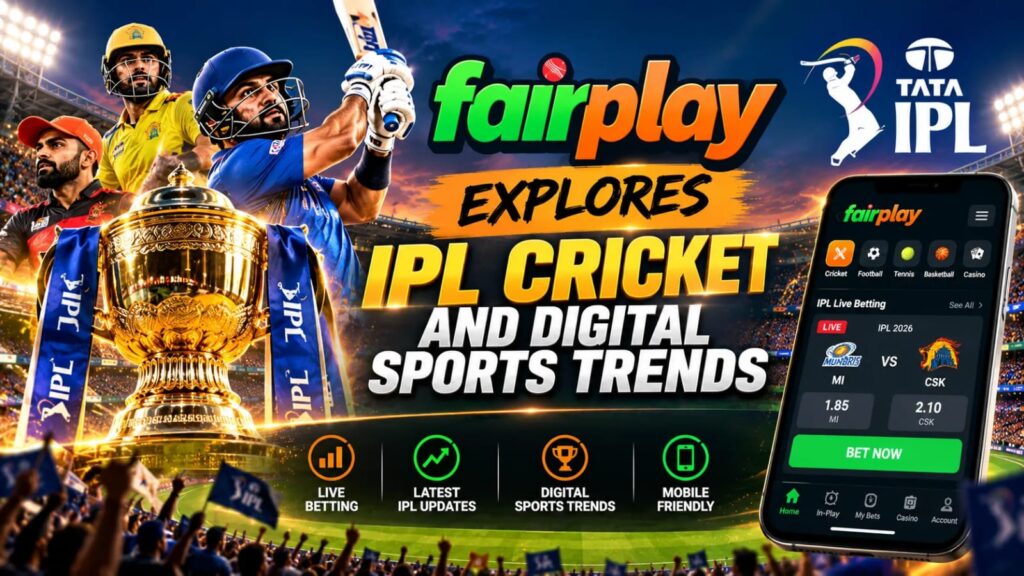

The Indian Premier League continues to demonstrate how cricket, mobile technology, and data-driven services are influencing the wider digital sports ecosystem.
The Indian Premier League has become a defining feature of India’s contemporary cricket landscape, bringing together sporting competition, digital media, statistical analysis, and extensive audience discussion. Fairplay, an online sports betting brand associated with fairplay.wtf, identifies IPL cricket among the sporting categories referenced in its platform positioning.
The tournament’s influence extends well beyond the cricket ground.
IPL matches generate interest in team selections, individual performances, tactical decisions, player form, and changing competitive standings.
Digital services have made much of this information available through smartphones and other connected devices, contributing to a sports environment in which audiences can follow developments across multiple channels.
For businesses operating in cricket-related digital markets, the IPL offers an opportunity to examine how technology is changing the presentation and consumption of sporting information.
It also brings attention to the distinction between general sports engagement and commercial activities involving financial risk.
IPL’s Role in India’s Digital Sports Culture
The IPL combines the traditional appeal of cricket with the structure of a recurring franchise competition.
Its format encourages engagement with individual teams, prominent players, emerging talent, and tournament standings.
Supporters can follow a particular franchise throughout the season while also monitoring developments involving competing teams.
This structure supports a broad range of digital activities, from match previews and statistical discussions to video highlights and social media commentary.
The tournament has also helped popularize new ways of presenting cricket information.
Scorecards, player comparisons, performance graphics, and match summaries are now familiar elements of the digital sports experience.
These resources can deepen audiences’ understanding of sporting events, although the accuracy and independence of the information remain important.
Fairplay’s association with IPL-related betting places it within one commercial segment connected to this wider cricket ecosystem.
That association should not be interpreted as an official relationship with the IPL, its organizers, or participating franchises unless such a relationship is independently established.
Cricket Statistics Become Part of Everyday Engagement
Cricket has long been a statistically rich sport.
Batting averages, strike rates, bowling economy, partnerships, and match conditions provide multiple ways to evaluate performances.
Digital technology has expanded access to these measures.
Information that once required specialist publications or detailed television analysis can now be presented through online scorecards, databases, and mobile applications.
During IPL competitions, fans may compare individual players, examine team combinations, or review previous results to understand how a fixture might develop.
These activities illustrate the increasing importance of data literacy within sports engagement.
However, statistical analysis has clear limitations.
Historical performances do not guarantee future results, and even sophisticated predictive models cannot account perfectly for injuries, tactical changes, weather, or unexpected sporting developments.
This distinction is especially important when statistical information appears alongside betting-related services.
The availability of extensive match data should not be presented as evidence that users can reliably generate profits through wagering.
Mobile Platforms Connect Audiences to Matches
Mobile technology has reduced the practical barriers to accessing cricket information.
Audiences can review match schedules while travelling, follow live scores during working hours, and read post-match analysis at their convenience.
The same technological changes have influenced expectations for other digital sports services.
Users often expect clear categories, responsive interfaces, and information that is easy to locate.
During major tournaments, the volume of available content can make these qualities especially important.
Digital businesses must decide how to organize competing information priorities without overwhelming users.
For platforms operating in the betting segment, this includes presenting sporting information separately from financial terms, promotional offers, and transaction-related notices.
Fairplay’s website positioning references cricket and IPL alongside other sports categories, making information organization a relevant aspect of any independent platform assessment.
Claims concerning actual mobile performance, reliability, or customer satisfaction would require direct testing or supporting data. Click Fairplay login to play.
Beyond Cricket: A Broader Sports Environment
Although cricket occupies a prominent position in India’s sporting culture, audiences also follow football, kabaddi, tennis, and numerous other competitions.
The growth of digital distribution has made international and domestic sporting events easier to discover.
A single sports information service may now address audiences with widely differing interests.
This creates opportunities for broader coverage, but it also introduces organizational challenges.
Different sports use different statistical conventions, competition structures, and event schedules.
An interface suitable for a cricket scorecard may not be appropriate for presenting a football fixture or kabaddi match.
Consequently, multi-sport platforms must consider how information can remain consistent without obscuring sport-specific details.
Fairplay’s published description references kabaddi and a wide range of additional sporting categories.
The exact number of supported sports and the availability of individual competitions should be confirmed through a current platform review before publication.
Information Quality and Consumer Awareness
As sports information becomes more accessible, users face a growing need to distinguish reliable data from promotional claims.
Official tournament records, established sports journalism, and independently maintained statistical resources may serve different purposes from commercially operated betting platforms.
Clear attribution and accurate presentation can help audiences understand these differences.
Consumer awareness is especially important where sporting content appears in proximity to wagering services.
Users should be able to identify whether a statement describes a verified match fact, an analytical opinion, an advertisement, or a financial transaction condition.
They should also understand that betting involves the possibility of losing money.
Responsible communication should avoid suggesting that enthusiasm for cricket, familiarity with teams, or access to statistics provides a dependable financial advantage.
Legal and Responsible Participation Considerations
Online betting in India is subject to significant legal and regulatory considerations.
The legality of particular services cannot be established simply by identifying the sporting events they cover or the technologies they use.
Operators must consider applicable national and state-level requirements, as well as relevant rules governing advertising, payments, and consumer protection.
Individuals should verify whether a service is lawful in their jurisdiction and whether they meet applicable eligibility requirements.
Responsible gambling measures, including age controls, financial safeguards, and access to support resources, remain important subjects for evaluating services in this sector.
Any claim that Fairplay has implemented particular safeguards should be supported by current, verifiable documentation.
The Future of Cricket-Related Digital Services
The IPL demonstrates how a major sporting competition can influence digital media, information design, and audience expectations.
As cricket audiences continue using connected devices to follow competitions, the presentation of accurate information and the quality of digital services will remain important considerations.
For commercial betting platforms, technological development must also be considered alongside legal compliance, transparent communications, and responsible operating practices.
Fairplay’s positioning within the cricket and IPL betting category provides one example of the broader relationship between sports audiences and digital commercial services.
The long-term development of this sector will depend not only on the popularity of cricket but also on whether platforms can demonstrate accountability and provide clear information about the services they offer.
About Fairplay
Fairplay is an online sports betting brand associated with fairplay.wtf. Its promotional positioning references cricket, the Indian Premier League, kabaddi, and additional sports categories. This release does not establish an official affiliation with any sporting league or governing body.