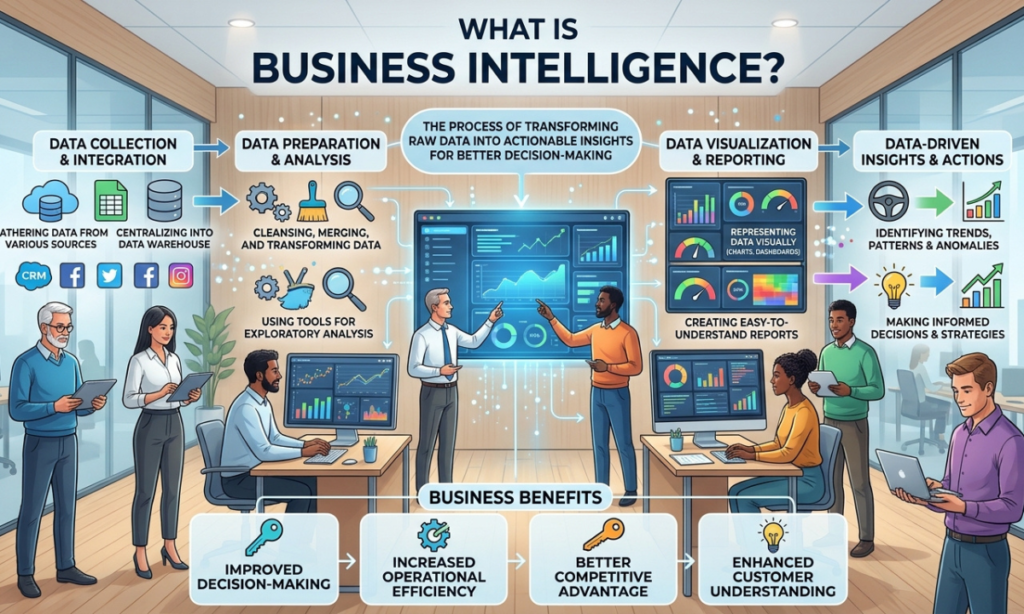

Businesses generate large amounts of data through sales, customer interactions, marketing campaigns, and daily operations. However, collecting information is not enough. Companies must understand that information and use it to make better decisions. This is where business intelligence becomes important. It helps organizations collect, organize, analyze, and present information in a meaningful way.
Companies can use these insights to understand customer behavior, monitor performance, reduce unnecessary expenses, and identify growth opportunities. Understanding What Is Business Intelligence is useful for business owners, managers, marketers, and anyone interested in how modern companies use data to improve their performance.
What Is Business Intelligence?
Business intelligence (BI) refers to the technologies, processes, and practices organizations use to collect, analyze, and present business information. Its main purpose is to help companies make informed decisions using reliable data.
Understanding the Meaning of Business Intelligence
In simple terms, business intelligence means turning raw business data into useful information. It combines information from sources such as sales records, customer databases, financial reports, and website analytics. BI tools organize this information into reports, charts, and dashboards that employees can understand and use.
The Main Purpose of Business Intelligence
The main purpose of What Is Business Intelligence is to help organizations understand their performance and make better decisions. It allows managers to identify problems, compare results, monitor progress, and recognize opportunities.
Why Business Intelligence Is Important for Modern Businesses
Modern businesses face changing customer expectations and strong market competition. What Is Business Intelligence provides useful information that helps organizations respond to these changes. It supports better planning, improves operational visibility, and allows companies to understand what is working and what needs improvement.
How Does Business Intelligence Work?
What Is Business Intelligence follows several steps to transform raw information into useful insights. The process generally involves collecting data, preparing it, analyzing results, and presenting findings.
Data Collection and Integration
The first step is collecting information from different sources, including sales systems, websites, spreadsheets, customer databases, and financial software. Businesses then combine relevant information so it can be examined together. For example, a retailer can combine online and physical store sales records to understand its overall performance.
Data Processing and Analysis
Collected information may contain errors, duplicate records, or missing details. What Is Business Intelligence prepare the data by organizing and checking it before analysis. BI tools then help identify patterns, compare results, and examine changes. A company might analyze monthly revenue to understand whether sales are increasing or decreasing.
Data Visualization and Reporting
Data visualization presents information through charts, graphs, tables, and dashboards. These formats make complicated information easier to understand. For example, a sales dashboard may display revenue, completed orders, customer numbers, and monthly targets in one place.
Turning Business Data Into Better Decisions
After analyzing information, managers use the findings to make practical decisions. For example, if a business discovers that a particular product generates strong sales, it may consider increasing stock or adjusting its marketing strategy. The final decision should also consider business goals and other relevant factors.
Key Components of Business Intelligence
Business intelligence combines different technologies and processes that work together to organize and explain business information.
Data Warehousing
A data warehouse stores organized information collected from different business sources. It allows employees to examine historical records and prepare reports using centralized data.
Data Mining
Data mining involves examining large datasets to discover patterns and relationships. For example, an online store may identify products that customers frequently purchase together.
Business Analytics
Business analytics uses analytical methods to investigate business information. It helps organizations understand performance, explore relationships, and evaluate possible outcomes.
Reporting and Dashboards
Reports provide detailed business information, while dashboards display important figures and performance indicators. Both help managers monitor activities and communicate findings.
Data Visualization
Data visualization uses graphical formats to present information. Bar charts, line graphs, and pie charts help users understand comparisons, trends, and changes more easily.
Different Types of Business Intelligence
Organizations use different BI approaches depending on their needs, available technology, and reporting requirements.
Traditional Business Intelligence
Traditional BI focuses on historical information, scheduled reports, and centralized reporting systems. Companies use it to examine previous performance and monitor business activities.
Self-Service Business Intelligence
Self-service BI allows employees to explore information and create reports without depending entirely on technical teams. It makes data analysis more accessible across departments.
Real-Time Business Intelligence
Real-time BI focuses on analyzing information as it becomes available. For example, retailers can monitor changing inventory levels and respond to product demand.
Cloud-Based Business Intelligence
Cloud-based BI uses internet-hosted platforms to provide reporting and analytics services. It can help organizations access business information without maintaining all infrastructure locally.
Predictive Business Intelligence
Predictive BI uses historical data and analytical models to estimate possible future outcomes. For example, retailers can examine previous sales patterns to estimate upcoming product demand.
Benefits of Business Intelligence for Businesses
Business intelligence offers several advantages when organizations use accurate information and apply insights correctly.
Better Decision-Making
BI helps managers make decisions using actual business information instead of assumptions. They can examine sales reports, customer feedback, and financial results before choosing a strategy.
Improved Operational Efficiency
Companies can use BI reports to identify delays, unnecessary expenses, and inefficient processes. This information helps managers improve workflows and use resources more effectively.
Understanding Customer Behavior
Businesses can examine purchasing habits, customer preferences, and feedback. These insights help companies improve their products, services, and customer experiences.
Identifying Market Trends and Opportunities
By examining historical and current information, companies can recognize changing customer demand and potential market opportunities. This supports better planning and marketing strategies.
Reducing Business Costs and Risks
BI helps organizations monitor expenses and identify unusual business activities. Although it cannot eliminate every risk, it provides useful information for evaluating problems and possible solutions.
Popular Business Intelligence Tools
Several platforms help companies analyze information and create business reports.
Microsoft Power BI
Microsoft Power BI is a reporting and analytics platform that allows users to create interactive dashboards, charts, and business reports.
Tableau
Tableau helps organizations explore information through interactive visualizations and reports.
Qlik Sense
Qlik Sense provides data exploration, reporting, and visualization features for business users.
Google Looker
Google Looker helps companies explore data, build dashboards, and create consistent business reports.
SAP BusinessObjects
SAP BusinessObjects provides enterprise reporting and information analysis capabilities.
How Companies Use Business Intelligence to Grow
Different industries use business intelligence to understand performance, improve services, and identify opportunities.
Business Intelligence in Marketing
Marketing teams analyze website traffic, advertising results, and customer engagement. This helps them understand which campaigns perform well and where marketing budgets may be better allocated.
Business Intelligence in Sales
Sales departments examine revenue, customer activity, and product performance. Managers can use these findings to compare results, monitor targets, and improve sales strategies.
Business Intelligence in Finance
Financial teams use BI to monitor expenses, revenue, budgets, and profitability. These reports support financial planning and help identify unexpected spending.
Business Intelligence in Healthcare
Healthcare organizations can analyze appointment patterns, resource usage, and administrative information. These insights can help improve scheduling and operational planning.
Business Intelligence in Retail and E-Commerce
Retailers examine customer purchases, inventory levels, and seasonal demand. This information helps them manage stock, understand popular products, and plan promotions.
Business Intelligence vs. Business Analytics
Both concepts involve using data to improve business decisions, but their typical purposes are slightly different.
Understanding Business Intelligence
What Is Business Intelligence focuses on understanding historical and current business performance through reports, dashboards, and data visualization.
Understanding Business Analytics
Business analytics uses statistical methods and analytical techniques to investigate business problems and explore possible future outcomes.
Key Differences Between Business Intelligence and Business Analytics
| Business Intelligence | Business Analytics |
| Examines business performance. | Investigates business problems. |
| Uses reports and dashboards. | Uses statistical analysis and models. |
| Explains what happened. | Explores why it happened and what may happen. |
| Supports performance monitoring. | Supports forecasting and deeper analysis. |
Challenges and Limitations of Business Intelligence
Despite its advantages, business intelligence also has some limitations that companies should consider before implementation.
Data Quality and Accuracy Issues
Incorrect or incomplete information can produce misleading reports. Businesses should regularly check and maintain their data.
Implementation and Maintenance Costs
BI software, employee training, infrastructure, and maintenance can require significant investment. Small companies should select tools that match their budgets.
Data Security and Privacy Concerns
Business systems may contain sensitive customer and financial information. Organizations need appropriate security measures and access controls.
Lack of Technical Knowledge
Employees may struggle to understand BI platforms without proper training. User-friendly tools and clear instructions can help overcome this problem.
Difficulty Integrating Different Data Sources
Combining information from different software platforms can be complicated. Businesses need suitable integration methods to maintain consistent records.
Read more: Small Scale Business Ideas: How to Choose the Right Business for You
The Future of Business Intelligence
Technology continues to change how companies collect, analyze, and use information. Several developments are influencing the future of business intelligence.
Artificial Intelligence and Machine Learning
AI and machine learning can help identify patterns, automate analysis, and support business recommendations. Human oversight remains important for checking results.
Real-Time Data Analysis
Companies can increasingly examine updated information to monitor sales, inventory, and customer activities. This supports quicker responses to changing conditions.
Automated Reporting and Smart Dashboards
Automated reports reduce repetitive manual work, while interactive dashboards help employees monitor important business metrics.
Predictive Analytics and Business Growth
Predictive analytics uses historical information to estimate possible future outcomes. Companies can use it to explore demand, prepare budgets, and improve planning.
Conclusion
Understanding What Is Business Intelligence helps explain how modern companies use data to improve their decisions and business performance. By collecting, organizing, and analyzing information, organizations can understand customers, monitor sales, manage expenses, and identify growth opportunities.
Tools such as Power BI, Tableau, Qlik Sense, and Looker make business information easier to explore through reports and dashboards. Although implementation requires accurate data, suitable technology, and proper training, business intelligence can provide valuable support for organizations of different sizes.
FAQs
1. What Is Business Intelligence?
Ans: Business intelligence is the process of collecting, analyzing, and presenting business data to support better decisions. It helps companies understand performance and identify growth opportunities.
2. How Does Business Intelligence Work?
Ans: What Is Business Intelligence collects information from different sources, organizes it, and analyzes important patterns. The results are presented through reports, charts, and dashboards.
3. What Are the Main Benefits of Business Intelligence?
Ans: What Is Business Intelligence improves decision-making, operational efficiency, and customer understanding. It also helps companies monitor expenses and identify market opportunities.
4. What Are the Most Popular Business Intelligence Tools?
Ans: Popular business intelligence tools include Microsoft Power BI, Tableau, Qlik Sense, Google Looker, and SAP BusinessObjects. They help businesses analyze data and create interactive reports.
5. Why Is Business Intelligence Important for Modern Businesses?
Ans: Business intelligence helps organizations make informed decisions using reliable information. It supports business growth through better planning, performance monitoring, and data analysis.