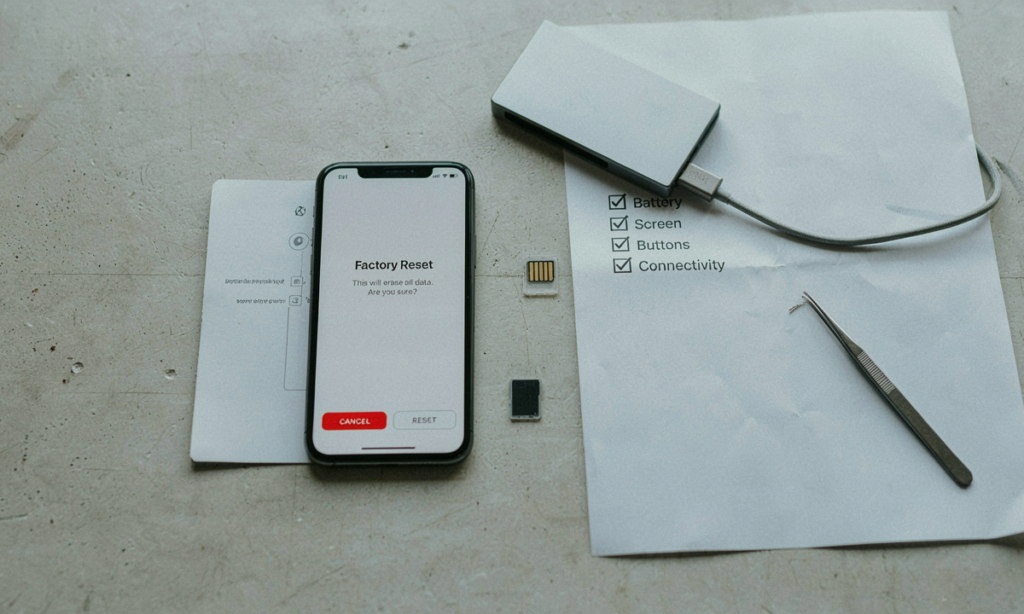

Selling a smartphone as refurbished requires more than confirming that it turns on. A refurbished device is expected to pass a defined inspection process, meet a condition standard, and function as described after resale. For a recommerce business, every missed defect can lead to a return, warranty claim, repair expense, or loss of customer trust. The inspection therefore has to cover hardware, software, security, battery performance, repair history, and physical condition.
The logic is similar to other digital environments where access depends on verifying several conditions before a user proceeds, whether that involves account settings, payments, or entertainment services such as fortune garuda 500 apk. In smartphone recommerce, however, verification applies to a physical product. Each device must be checked against a repeatable list before it can be described, graded, priced, and offered to another customer.
Confirm the Identity of the Device
The inspection should begin by identifying exactly what has arrived. The store needs to confirm the model, storage capacity, network configuration, serial information, and other identifiers used to distinguish one version from another.
This matters because resale prices can differ between configurations that look almost identical. The identifier should also match the information stored in the operating system and, where relevant, on the device housing or packaging. Any mismatch should trigger further investigation before the phone enters inventory.
The business should also check whether the device has been reported lost, blocked from network use, or connected to ownership restrictions that could prevent resale.
Check the Display and Touch System
The screen is one of the components customers notice first and one of the most common sources of returns.
Inspectors should check for cracks, scratches, dead pixels, discoloration, image retention, brightness problems, flickering, and uneven backlighting. Touch response should be tested across the whole display rather than only around the center.
Multi-touch gestures should also work correctly. A screen may appear functional during basic navigation while failing to register touches in one area.
If the display has been replaced, the store should confirm that brightness, touch sensitivity, proximity functions, and screen fit remain within its refurbishment standards.
Measure Battery Condition
Battery performance can determine whether a used smartphone is suitable for refurbished resale.
The inspection should include available battery-health data, charging behavior, discharge rate, overheating, and stability under load. A device that shows a high charge percentage but loses power quickly may have a battery that requires replacement.
Technicians should also confirm that the phone charges through its main port and, when supported, through other charging methods.
The business needs a clear battery threshold. Devices below that threshold should either receive a replacement battery or be sold under another category with the limitation disclosed.
Test Cameras, Microphones, and Speakers
A phone can pass basic startup checks while containing faults in components that customers use every day.
Every camera should be opened and tested for focus, image quality, stabilization, flash operation, video recording, and switching between lenses. Dust, damaged glass, or internal marks can affect the result even when the camera application works.
Microphones should be tested through calls, recordings, and video where possible. Speakers and earpieces should be checked for distortion, low volume, vibration, or intermittent output.
These tests are important because audio defects may only appear during specific use cases.
Inspect Buttons, Ports, and Physical Components
Physical controls need individual testing. Power buttons, volume controls, mute switches, fingerprint readers, and other hardware inputs should respond consistently.
Charging and data ports should be inspected for dirt, corrosion, looseness, or damaged contacts. A cable that works only when held at an angle indicates a problem even if the device technically charges.
The frame and housing should also be checked for bends, dents, gaps, loose panels, cracked camera glass, and signs that the phone has been opened before.
Visible gaps may indicate poor repair work, impact damage, or problems with internal components.
Verify Wireless Connections and Sensors
A refurbished smartphone should be tested across its connectivity functions.
The inspection may include mobile network reception, Wi-Fi, Bluetooth, location services, and short-range communication functions supported by the device. Connection tests should verify more than whether a settings menu can detect a network. The phone should actually connect and exchange data.
Sensors also need attention. Orientation, proximity, ambient light, vibration, biometric authentication, and motion functions can fail without preventing the phone from starting.
A consistent diagnostic procedure helps ensure that less visible defects are not missed.
Look for Signs of Water or Previous Repair
Previous damage affects both reliability and resale value.
Technicians should check for corrosion, moisture indicators, residue around ports, marks around screws, gaps in adhesive, or mismatched components. These signs may suggest previous water exposure or repair work.
A prior repair does not automatically disqualify a device. The issue is whether the work meets the seller’s standard. Replacement parts should function correctly, fit properly, and not create faults in nearby systems.
If the history cannot be verified, the business should avoid making claims that cannot be supported.
Remove Accounts and Personal Data
A phone cannot be prepared for resale until the previous owner’s data and access restrictions have been removed.
The store should confirm that user accounts are signed out, device-locking services are disabled, local files are erased, and the operating system can be activated by the next owner.
A factory reset alone may not be sufficient if an account lock remains active. The device should therefore be reset, restarted, and taken through enough of the setup process to confirm that it can be used by another customer.
Data handling should follow a documented procedure rather than relying on individual staff habits.
Finish With Grading and a Final Quality Check
After technical testing, the device needs a condition grade that reflects both function and appearance.
The grade should account for screen wear, frame damage, housing condition, battery status, repair history, and any remaining defects permitted by the store’s rules. The description and photos should match that grade.
A final check before listing is valuable because refurbishment may involve cleaning, part replacement, software reset, and repeated handling. A phone that passed its first inspection can still develop an issue during processing.
A smartphone should only be sold as refurbished when the seller can support that label with evidence. Identity verification, display testing, battery checks, cameras, audio, ports, sensors, connectivity, repair inspection, data removal, and final grading together create that evidence. The goal is not merely to make a used device look ready for sale, but to prove that it meets a defined resale standard.