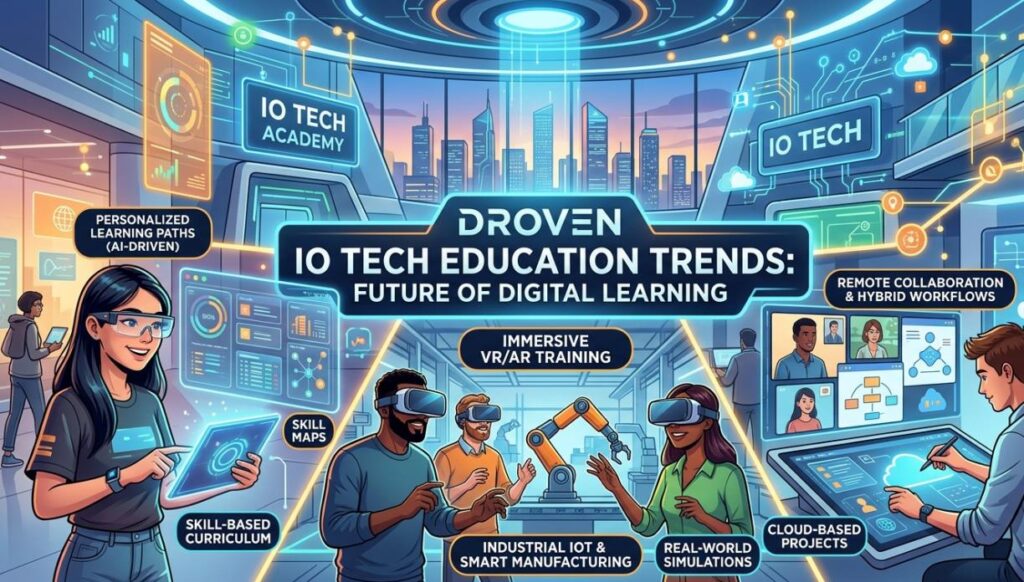

Education is experiencing one of the most significant transformations in history. Digital technologies are reshaping how students learn, teachers instruct, and educational institutions deliver knowledge. From artificial intelligence and virtual classrooms to personalized learning experiences, technology is creating opportunities that were unimaginable just a decade ago.
One topic gaining attention among educators, technology enthusiasts, and digital learning professionals is Droven IO Tech Education Trends. This concept represents the growing influence of innovative technologies, data-driven learning, and modern educational strategies that aim to improve learning outcomes while making education more accessible and engaging.
Rather than simply replacing traditional classrooms, these innovations are enhancing them. Students now have access to interactive learning platforms, intelligent tutoring systems, cloud-based resources, and immersive experiences that support different learning styles. At the same time, educators can use real-time analytics to identify learning gaps, personalize instruction, and improve student engagement.
Droven IO Tech Education Trends in detail, explaining the technologies behind modern education, their benefits, challenges, and the direction digital learning is taking. Whether you are a student, teacher, school administrator, or lifelong learner, understanding these trends will help you prepare for the future of education.
What Are Droven IO Tech Education Trends?
The phrase Droven IO Tech Education Trends refers to the evolving technologies, teaching methods, and digital innovations that are shaping the future of education. These trends focus on using modern tools to make learning smarter, more personalized, and more accessible for everyone.
Instead of relying solely on textbooks and classroom lectures, today’s educational environments combine technology with proven teaching practices to improve both teaching efficiency and student success. Some of the key areas associated with these trends include:
- Artificial Intelligence (AI)
- Adaptive learning systems
- Cloud-based education platforms
- Mobile learning
- Virtual and augmented reality
- Learning analytics
- Digital collaboration tools
- Online assessment technologies
Together, these innovations create learning environments where students receive education tailored to their individual needs rather than following a one-size-fits-all approach.
Why Are These Trends Becoming More Important?
Education has changed dramatically because of several global factors:
- Increased internet accessibility
- Growth of remote and hybrid learning
- Demand for digital skills in the workplace
- Rapid advances in AI and automation
- Expansion of online learning platforms
Today’s employers value problem-solving, digital literacy, collaboration, and continuous learning. Educational institutions must therefore prepare students not only with academic knowledge but also with practical skills that remain relevant in a rapidly changing world. Modern technology helps achieve these goals by making education more flexible, engaging, and data-driven.
Read More: Home Tech World: Smart Home Technology Guide & Latest Trends
Core Objectives of Modern Educational Technology
The main purpose of current educational technology is not simply digitizing classrooms. Instead, it focuses on improving learning experiences through several objectives:
Personalized Learning: Every student learns differently. Intelligent platforms analyze learning patterns and recommend lessons based on individual strengths and weaknesses.
Greater Accessibility: Students can learn from virtually anywhere using computers, tablets, or smartphones. This expands educational opportunities for learners in remote locations.
Higher Student Engagement: Interactive quizzes, videos, simulations, and gamified lessons encourage students to participate actively rather than passively consuming information.
Continuous Skill Development: Technology enables lifelong learning by offering flexible online courses, certifications, and professional development opportunities for learners of all ages.
The Evolution of Technology in Education
Education has evolved significantly over the past several decades. Traditional classrooms once depended almost entirely on printed books, face-to-face lectures, and handwritten assignments. While these methods remain valuable, technological innovation has introduced more efficient and engaging ways to teach and learn.
Traditional Learning vs. Digital Learning
Traditional education provides direct interaction between teachers and students, structured classroom environments, and established teaching methods. However, it often lacks flexibility and personalized instruction. Digital learning offers several advantages:
- Flexible schedules
- Self-paced learning
- Multimedia content
- Instant feedback
- Global access to educational resources
- Improved collaboration through online platforms
Rather than replacing traditional education, digital learning complements it by providing additional resources and learning opportunities.
Major Milestones in Educational Technology
Educational technology has progressed through several important stages:
- Computer-assisted learning
- Internet-based research
- Learning Management Systems (LMS)
- Massive Open Online Courses (MOOCs)
- Mobile learning applications
- Artificial intelligence integration
- Virtual and augmented reality experiences
Each advancement has made education more interactive, scalable, and learner-focused.
How Technology Has Changed Student Learning
Students today expect learning experiences similar to the technology they use daily. Videos, interactive exercises, discussion forums, and instant feedback have become standard features of modern education. Technology also encourages independent learning.
Instead of waiting for classroom instruction, students can access tutorials, online libraries, digital textbooks, and educational communities whenever they need assistance. As a result, learning becomes an ongoing process rather than something limited to school hours.
Major Droven IO Tech Education Trends Shaping Digital Learning
Educational technology continues evolving rapidly. Understanding the major innovations behind Droven IO Tech Education Trends helps educators and learners prepare for the future.
Artificial Intelligence in Education
Artificial Intelligence has become one of the biggest drivers of educational innovation. AI-powered systems can:
- Recommend personalized learning paths
- Provide instant feedback
- Automate grading
- Identify learning difficulties
- Support teachers with administrative tasks
For students, AI acts like a virtual tutor available whenever additional guidance is needed. Instead of replacing educators, AI enhances their ability to deliver individualized support. As AI continues to improve, educational experiences are becoming more adaptive and responsive to each learner’s needs.
Personalized Learning Experiences
One of the most significant developments in modern education is adaptive learning. Instead of presenting identical lessons to every student, adaptive platforms adjust content based on performance and learning speed.
For example:
- Advanced learners receive more challenging material.
- Students struggling with specific topics receive additional explanations and practice.
- Learning recommendations evolve continuously as students progress.
This personalized approach improves motivation while reducing frustration caused by overly difficult or repetitive lessons.
Virtual Reality (VR) and Augmented Reality (AR)
Immersive technologies are transforming how students understand complex subjects. Instead of reading about historical landmarks, students can virtually explore them. Science learners can conduct simulated laboratory experiments, while medical students can practice procedures in safe virtual environments. Benefits include:
- Better knowledge retention
- Increased engagement
- Practical learning experiences
- Reduced training risks
- Improved understanding of abstract concepts
As VR and AR become more affordable, they are expected to play an increasingly important role in classrooms worldwide.
Gamification in Education
Learning becomes more enjoyable when educational activities include game-like elements. Gamification introduces:
- Achievement badges
- Progress tracking
- Leaderboards
- Challenges
- Interactive rewards
These features encourage participation and make learning feel less intimidating, especially for younger students. Research consistently shows that engaged learners are more likely to complete courses and retain information effectively.
Modern learning platforms increasingly combine educational content with motivational design, creating environments where students remain actively involved throughout their learning journey.
Cloud-Based Learning Platforms
Cloud technology has become one of the strongest foundations of modern digital education. Instead of storing educational resources on individual computers, cloud-based platforms allow students and educators to access learning materials from virtually anywhere with an internet connection.
This flexibility has transformed how schools, universities, and businesses deliver education. Learners can join live classes, submit assignments, collaborate on projects, and access recorded lectures without being physically present in a classroom. Key advantages include:
- Secure storage of educational resources
- Real-time collaboration between students and teachers
- Automatic software updates
- Easy access across multiple devices
- Reduced infrastructure costs for institutions
Cloud-based Learning Management Systems (LMS) also make it easier for educators to organize courses, monitor progress, and provide timely feedback. As a result, Droven IO Tech Education Trends continue to encourage cloud-first educational strategies that improve both accessibility and efficiency.
Mobile Learning (mLearning)
Smartphones and tablets have become powerful learning tools. Mobile learning, often called mLearning, enables students to continue their education wherever they are. Whether commuting, traveling, or studying at home, learners can watch educational videos, read digital textbooks, participate in quizzes, and communicate with instructors through mobile applications. Benefits of mobile learning include:
- Learning on demand
- Flexible study schedules
- Better accessibility for remote learners
- Increased engagement through educational apps
- Continuous skill development
As mobile internet speeds improve worldwide, educational content is becoming easier to access than ever before.
Learning Analytics and Big Data
Modern educational platforms collect valuable learning data that helps institutions make informed decisions. Learning analytics can answer questions such as:
- Which lessons are most difficult?
- Which students need additional support?
- What teaching methods improve outcomes?
- How engaged are students during courses?
Instead of relying on assumptions, educators can use real data to improve instruction and student performance.
For example, if analytics show that many students struggle with a particular topic, teachers can provide additional resources or redesign lessons to improve understanding. This data-driven approach represents one of the most valuable aspects of Droven IO Tech Education Trends, helping institutions continuously improve educational quality.
Benefits of Droven IO Tech Education Trends
Technology is not changing education simply because it is innovative—it is solving real problems for learners, educators, and institutions. Understanding these benefits explains why digital transformation continues to accelerate across the education sector.
Benefits for Students
Students are at the center of educational innovation. Modern technology provides learning experiences that are more engaging, flexible, and personalized than traditional methods alone. Major benefits include:
- Self-paced learning
- Interactive multimedia lessons
- Instant feedback on assignments
- Access to global educational resources
- Improved collaboration with classmates
- Better preparation for digital careers
Students also develop valuable digital literacy skills that employers increasingly expect in today’s workforce.
Benefits for Teachers
Technology empowers educators rather than replacing them. Teachers can automate repetitive administrative tasks, allowing them to spend more time supporting students and improving lesson quality. Key advantages include:
- Faster grading through automation
- Better classroom management
- Personalized instruction using analytics
- Easier communication with students
- Access to high-quality teaching resources
Professional development has also become more accessible through webinars, online certifications, and virtual teaching communities.
Benefits for Schools and Universities
Educational institutions benefit from improved operational efficiency and enhanced learning outcomes. Some institutional advantages include:
- Reduced printing costs
- Centralized course management
- Improved student retention
- Better performance tracking
- Increased accessibility for remote learners
- Scalable online education programs
Digital learning also enables institutions to reach students beyond geographical boundaries, expanding educational opportunities globally.
Benefits for Businesses and Professional Training
Corporate learning has rapidly adopted digital education technologies to support employee development. Organizations now use online learning platforms to deliver:
- Compliance training
- Technical certifications
- Leadership development
- Software training
- Customer service education
Employees can learn without interrupting daily work, making professional development more efficient and cost-effective.
Professional Comparison
| Feature | Traditional Education | Technology-Driven Education |
| Learning Style | Fixed classroom schedule | Flexible and self-paced |
| Access to Resources | Printed books and notes | Digital libraries, videos, and cloud platforms |
| Student Engagement | Mostly lectures | Interactive, multimedia, and gamified learning |
| Personalization | Limited | AI-driven personalized learning paths |
| Assessment | Periodic exams | Continuous assessments with instant feedback |
| Collaboration | Classroom discussions | Real-time online collaboration tools |
| Accessibility | Location-dependent | Learn from anywhere with internet access |
| Data Insights | Manual evaluation | Learning analytics and performance tracking |
Challenges Facing Modern Educational Technology
Despite remarkable progress, digital education still faces several important challenges. Recognizing these issues helps institutions develop more effective strategies for successful implementation.
The Digital Divide
Not every student has equal access to reliable internet connections, modern devices, or digital learning resources. Rural communities and economically disadvantaged learners may struggle to participate fully in online education. Bridging this gap requires investment in infrastructure, affordable internet services, and device accessibility.
Data Privacy and Cybersecurity
Educational platforms collect sensitive student information, including personal details, academic records, and learning behavior. Schools and technology providers must prioritize:
- Secure data storage
- Strong authentication methods
- Privacy compliance
- Regular cybersecurity updates
- Responsible use of learning analytics
Protecting student information is essential for maintaining trust and ensuring safe digital learning environments.
Teacher Training and Technology Adoption
Introducing new technology is only effective when educators understand how to use it confidently. Continuous professional development should include:
- Digital teaching strategies
- AI-assisted instruction
- Online classroom management
- Educational software training
- Cybersecurity awareness
Institutions that invest in teacher training typically achieve better learning outcomes because technology is integrated thoughtfully rather than simply added to existing teaching methods.
As Droven IO Tech Education Trends continue to evolve, the most successful educational organizations will be those that combine innovative technology with skilled educators, creating learning experiences that are both effective and inclusive.
Best Practices for Implementing Tech Education Solutions
Successfully adopting educational technology requires more than purchasing new software. Institutions should develop a clear digital learning strategy that aligns with educational goals and student needs.
Develop a Long-Term Digital Learning Strategy
Schools and organizations should identify their objectives before implementing new technologies. Whether the goal is improving engagement, increasing accessibility, or enhancing assessment, having a roadmap ensures better outcomes.
Invest in Teacher Training
Teachers are the driving force behind successful digital transformation. Regular workshops, certifications, and hands-on training help educators confidently integrate technology into their teaching practices.
Choose Reliable Learning Platforms
Select platforms that are secure, user-friendly, scalable, and compatible with existing systems. A reliable platform should support collaboration, assessments, multimedia learning, and data protection.
Measure Learning Outcomes
Use learning analytics to evaluate student progress, identify learning gaps, and improve teaching strategies. Continuous assessment ensures that technology delivers measurable educational value.
Future Innovations Shaping Education
The next decade promises even greater advancements in educational technology. Several innovations are expected to redefine digital learning.
Generative AI: Generative AI can create personalized study guides, quizzes, lesson summaries, and interactive learning materials in seconds. When used responsibly, it supports educators by reducing repetitive tasks while helping students receive customized assistance.
Blockchain Credentials: Blockchain technology offers secure, tamper-proof academic certificates and transcripts. This simplifies credential verification for employers and educational institutions worldwide.
Internet of Things (IoT) and Smart Classrooms: Connected devices such as interactive whiteboards, smart sensors, and attendance systems create more efficient learning environments while providing valuable classroom insights.
5G Connectivity: Faster internet speeds enable smoother virtual classrooms, real-time collaboration, and immersive VR learning experiences with minimal delays. These innovations demonstrate why Droven IO Tech Education Trends will continue to influence the future of education for years to come.
Expert Insights and Unique Recommendations
Many articles discuss educational technology but often focus only on listing popular tools. A more effective approach is understanding how technology should be implemented. Here are several expert recommendations:
- Start with educational objectives rather than technology itself.
- Combine AI with human teaching instead of replacing educators.
- Prioritize accessibility so every learner can benefit.
- Continuously measure learning outcomes and adjust strategies.
- Develop students’ critical thinking, creativity, communication, and digital literacy alongside technical skills.
Institutions that follow these principles are more likely to achieve sustainable improvements rather than temporary technological upgrades.
Conclusion
Education is no longer limited by classroom walls or traditional teaching methods. Technology has created opportunities for personalized learning, global collaboration, and lifelong skill development that benefit students, educators, institutions, and businesses alike.
As Droven IO Tech Education Trends continue to evolve, organizations that embrace innovation while maintaining high educational standards will be best positioned for long-term success. The future of learning is not simply digital—it is intelligent, adaptive, inclusive, and learner-centered.
By investing in the right technologies, supporting educators with continuous training, and focusing on meaningful learning outcomes, educational institutions can prepare learners for an increasingly digital world. The journey toward smarter education has already begun, and staying informed about Droven IO Tech Education Trends is an important step toward embracing that future.
FAQs
Q1: What are Droven IO Tech Education Trends?
Ans: Droven IO Tech Education Trends refer to emerging technologies and innovative teaching methods that improve education through AI, cloud learning, adaptive learning, mobile education, learning analytics, and other digital tools.
Q2: Why are Droven IO Tech Education Trends important?
Ans: They help create personalized learning experiences, improve student engagement, increase accessibility, and prepare learners with digital skills needed in today’s workforce.
Q3: How does artificial intelligence improve education?
Ans: AI supports personalized learning, automates grading, provides instant feedback, identifies learning gaps, and assists teachers with administrative tasks, allowing more time for student interaction.
Q4: What technologies are driving digital learning today?
Ans: Artificial intelligence, cloud computing, virtual reality, augmented reality, mobile learning, learning analytics, blockchain credentials, and smart classroom technologies are among the leading innovations.
Q5: What challenges do schools face when adopting educational technology?
Ans: Common challenges include limited internet access, cybersecurity concerns, budget constraints, teacher training requirements, and ensuring equal access for all students.
Q6: How can educational institutions successfully implement new technology?
Ans: Institutions should develop a clear digital strategy, invest in teacher training, select reliable learning platforms, prioritize cybersecurity, and regularly evaluate learning outcomes.
Q7: Will technology replace traditional classrooms?
Ans: No. Technology is designed to enhance traditional education by improving accessibility, collaboration, and personalized learning rather than replacing teachers or classroom instruction.
Q8: What skills will students need for the future of digital learning?
Ans: Students should develop digital literacy, critical thinking, communication, collaboration, creativity, adaptability, and problem-solving skills to succeed in a technology-driven world.



Pingback: Why Gaming Is Fun ScookieGeek: Complete Guide & Top Reasons